
Tags
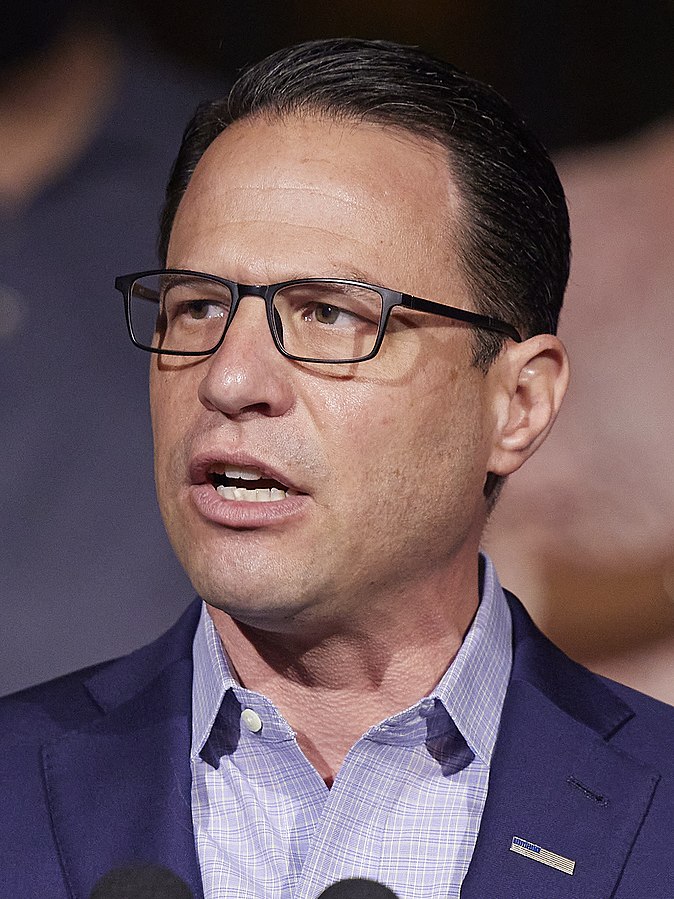
MAY 27, 2022 – PHILADELPHIA, PA
Kamala Harris has selected Tim Walz (the governor of Minnesota) as her Vice-Presidential running mate, allaying fears that she would choose Josh Shapiro (the governor of Pennsylvania), whose overt pro-Israel stances were cause for concern with the more progressive wing of the Democratic Party. Indeed, Shapiro came under fire for a variety of pro-Israel positions and statements that he made over the past 30 years, as well as certain questionable ties to Israel.
While in high school, he volunteered on a “service project” at an Israeli army base (in all likelihood during the first Intifada), but allegedly did not serve in a combat role.
In September 1993, soon after the Oslo Accord was signed, he published an op-ed in the Campus Times, the student newspaper at the University of Rochester where he did an undergraduate degree in Political Science, stating that Palestinians “do not have the capabilities to establish their own homeland and make it successful even with the aid of Israel and the United States. They are too battle-minded to be able to establish a peaceful homeland of their own”. He also stated that “I find it impractical to believe that factions of Arabs can miraculously unite in peace as Palestinians, so they can coexist with Israel”.
Between April and September of 1996, he worked at the Israeli embassy in the Public Affairs (Hasbara) division, where his job consisted of “educating” the public about Israel.
More recently in 2021, as Attorney General of Pennsylvania, he threatened to unleash Pennsylvania’s (likely unconstitutional) anti-BDS law against Ben & Jerry’s after they refused to sell their products in illegal West Bank settlements. He also accused the Boycott Divestment and Sanctions (BDS) movement of being “rooted in antisemitism”, and (erroneously) claimed that “the stated goal of this amorphous movement is the removal of Jewish citizens from the region”.
In April of this year, as students were protesting the Gaza genocide on campuses across the country and pressuring their universities to divest from companies linked to Israel’s human rights abuses, he likened the largely peaceful protests to the Ku Klux Klan, stating that “we have to query whether or not we would tolerate this if this were people dressed up in KKK outfits or KKK regalia making comments about people who are African American in our communities”.
Also in April, the Philadelphia branch of the Council on American-Islamic Relations (CAIR) released a statement accusing him of failing to call for a ceasefire in Gaza, attacking academic freedom, “intentionally depicting protests in a negative light”, failing “to care for and listen to Palestinian Pennsylvanians whose families are being massacred day in and out by the Israeli government”, and antagonizing community organizations.
It is no surprise then, when Harris selected Walz over Shapiro as her running mate, that many viewed that decision positively. It is likely the case that Shapiro’s publicly inflammatory statements against Palestinians and their supporters, as well as his ties to Israel, factored in him not being chosen. According to an-depth expose by CNN about how the nomination process unfolded, Shapiro “had become something of a lightning rod for Gaza protests that Harris was not eager to revisit”. One Democratic advisor close to the search process said that “nobody wanted to rip that scab back open” (although others supposedly disagreed that Gaza played a role). It is also important to note that other factors likely played a role in Shapiro not being selected, as according to CNN, “Shapiro struck some as overly ambitious, and “Walz was seen as a pick that would come with less drama and palace intrigue” (perhaps referring to the Ellen Greenberg murder/suicide case that Shapiro got embroiled in). Regardless of other factors, the apparent fact that Gaza likely played a role in Shapiro not being selected is a positive development, in the sense of an overt pro-Israeli / anti-Palestinian politician being viewed as a liability by the Democratic establishment because they worry that certain demographics (young voters, Muslims and Arab Americans) will punish them at the polls. Although one should not oversell the point given the symbolic nature of the VP position, it is indeed something to build on. Nassim Nicolas Taleb said it well: “Today’s choice of VP demonstrates that being anti-Palestinian is no longer a political asset”.
Having said all of that, Tim Walz’s record on Palestine, which hasn’t been examined in as much detail, reflects a consistent pro-Israeli position. That, however, will be the topic of a seperate article.
 Notes From Underground