
Tags
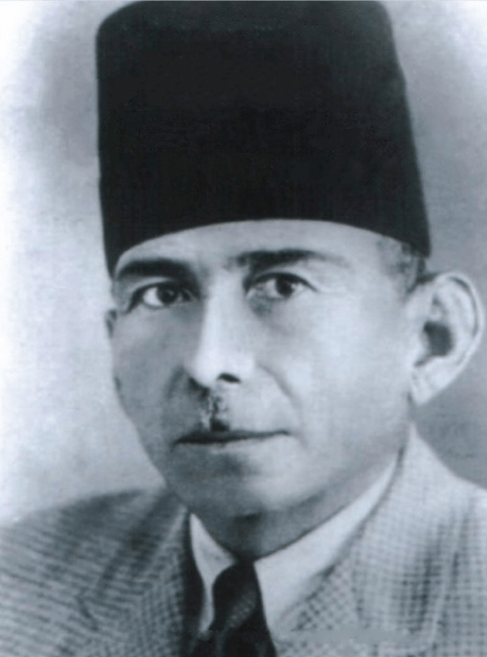
Issa El-Issa (1878 – 1950) was a Palestinian Greek Orthodox Christian from Jaffa and an important journalist who founded and managed the Falastin (Palestine) newspaper. Growing up between Palestine and Lebanon, he graduated from the American University of Beirut, and worked various odd jobs in journalism (and non-journalism) until he founded Falastin, turning it into one of the most widely-read and influential Palestinian newspapers in the first half of the twentieth century (along with Al-Karmil, owned and edited by Najib al-Khuri Nassar). Two themes would dominate Issa El-Issa’s life, and by extension, the pages of Falastin: his advocacy for the Arab Orthodox Movement in their struggle to increase Arab representation and influence within the Greek-dominated Orthodox Patriarchate of Jerusalem, and the Zionist colonization of Palestine.
The first issue of Falastin was dated January 14th 1911, with the newspaper being published twice a week in Jaffa (which, at the time, was part of the Jerusalem Mutasarrifiyah in the Ottoman Empire). El-Issa’s cousin, Yusuf El-Issa, served as Falastin’s editor-in-chief in its early years until 1914 (Issa El-Issa assumed those responsibilities afterwards), with the newspaper espousing an “editorial policy [that] was progressive as it fought against fanaticism, sectarianism, bigotry and ignorance. Its editors espoused Ottomanism and secularism and adopted an inclusive approach considering all inhabitants, irrespective of their ethnic or religious background, equal members of the Ottoman nation1”. Issa El-Issa would go on to publish Falastin until 1938, when he was forced into exile (to Beirut) because of death threats made by the supporters of the Mufti of Jerusalem al-Hajj Amin al-Husayni during the Great Arab Revolt (1936-1939), with his house and belongings set on fire and destroyed. Although he was associated with Raghib Al-Nashashibi – a rival of the Mufti – he had “nothing positive to say about [him] during the part of his memoir devoted to the latter years of his life2”, and withdrew from Al-Nashashibi’s National Defense Party in 1939. After his exile, his son Raja El-Issa would continue publishing Falastin in Jaffa until April 1948, when Zionist forces took over the town. The newspaper was moved to Jerusalem afterwards, and continued to be published until March of 1967.
Falastin was originally established to lend a voice to the struggle of the Arab Orthodox Movement against the Greek clergy of the Orthodox Patriarchate of Jerusalem, who dominated the upper hierarchy of the Orthodox church throughout the Ottoman empire. The goal of the movement was to empower the native Arab Christians “in the higher reaches of the clergy as well as [to secure] a greater share for the laity of the church’s substantial land and economic resources”. The newspaper was suspended twice in those early years for criticizing the Greek Brotherhood of the Holy Sepulcher. It is noteworthy that the two key topics discussed in Falastin and that would go on to dominate Issa El-Issa’s life – the monopoly on the upper echelons of the Orthodox Patriarchate of Jerusalem by the Greek Brotherhood of the Holy Sepulcher, and the Zionist colonization of Palestine – became interrelated when the Patriarchate, which owned significant holdings of land in Palestine, likely sold land to Zionist buyers, as discussed in the 1914 Falastin article “The Zionists and the Religious Endowments of the Greek Orthodox Monastery” (as a side note, the Patriarchate, whose upper echelons are still dominated by the Greek clergy today, found itself mired in controversy in 2005 when the former Patriarch Irenaios I was dismissed from his position after selling land to Israeli investors).
Interestingly, in his book From Ambivalence to Hostility, Emanuel Beska convincingly argues that Falastin was initially ambivalent towards Zionism when it was founded in 1911, providing space for both pro and anti-Zionist voices early on, with Issa El-Issa and his cousin purposely not taking part in the discussion and maintaining neutrality. The first shift in Falastin’s editorial policy towards Zionism occurred in mid-1912 as a result of several incidents that raised awareness in the editors’ minds about the exclusive nature of the Zionist project, in particular, the discrimination in the admission of non-Jewish Palestinian students to Miqve Yisrael, “an agricultural school founded in 1870 by Charles Netter [that] was part of the system of educational institutions run by the Alliance Israélite Universelle3”. As an Ottoman school, Miqve Yisrael had an obligation to accept students of all faiths – an obligation it had failed to fulfil – and several articles in Falastin were devoted to discussing this issue over two months, with the editors taking a firm stance in support of an inclusive admission policy. By mid-1913, the tone of the newspaper had become more hostile towards Zionism as a result of two incidents that made Zionist territorial ambitions clearer to the editors of Falastin – specifically, attempts to purchase the former estates of Sultan Abdulhamid II, which consisted of about three percent of Palestine’s land area, and the Eleventh Zionist Congress, which took place in Vienna in September 1913. Both of these events seemed to have caused a substantial shift in the editorial policy of Falastin, especially the latter, with significant space in the newspaper dedicated to analyzing speeches made at the Congress, ultimately persuading the editors of the existential danger that Zionism posed. After that point, Falastin established itself as one of the fiercest voices against Zionist colonization of Palestine, and the newspaper was suspended in the spring of 1914 and Issa El-Issa was put on trial based on the claim that an article (titled “Advice”) provoked animosity towards Jews. Issa El Issa successfully and valiantly defended himself and the newspaper, arguing that the article criticized not Jews, but Zionists, stating that “we have repeatedly defended it [Judaism] and many times rebutted what was attributed to it […] when we said ‘Zionists’ we referred to the political organization with its headquarters in Europe which aims for the colonization of Palestine, the usurpation of its lands and its transformation into a Jewish homeland4”.
Issa El-Issa was a Palestinian patriot, and a believer in a complementary pan-Arab identity, and his newspaper reflected that. As Rashid Khalidi has remarked in his book The Iron Cage, Falastin was a “journalistic pioneer of an unwavering opposition to Zionism on both the Palestinian and Pan-Arab levels. It deserves the attention it has begun to receive as an important organ of opinion in pre-1948 Palestine, and one of the foremost Palestinian papers to have an impact on the rest of the Arab world, as does its editor, Issa El Issa5”. El Issa also lived that dual identity. After the Ottomans shut down Falastin during World War I and exiled Issa El-Issa and his cousin to a remote area of Anatolia (where he was able to develop good relationships with the locals by virtue of his mastery of the Arabic language, and his ability to cite the Quran and the Hadith), he was sought after by the Hashemite King Faisal to head his diwan in the short-lived Arab Kingdom of Syria (1918 – 1920), which he did until the Kingdom’s defeat in July 1920. Although his relationship with the Hashemites was complicated, his ultimate loyalty was always to Palestine, often at the expense of his professional and personal life. He spared no one in his defense of Palestine, not only methodically exposing Zionist machinations to take over the land, but also ruthlessly criticizing the British for enabling it (Falastin was shut down numerous times by the British authorities during the Mandate period), as well as the Palestinian national leadership for failing to effectively oppose it. After pushing for the interrelation of the Arab and Palestinian arenas for most of his life as a mechanism to thwart Zionist ambitions in Palestine, he was forced to admit that Arab leaders, just like the Palestinian national leadership, were ineffective and could not be counted on. His faith in Arab leadership to save Palestine was lost after the Nakba of 1948, after which he wrote the following verses:
“Oh little kings of the Arabs, by the Grace of God
Enough feebleness and infighting
Once upon a time our hopes were on you
But all our hopes are dashed6”.
Issa El-Issa died on June 29th 1950 in Beirut, having never returned to Palestine after his self-imposed exile in 1938. Last month, we celebrated the recent passing of the 75th anniversary of his death in the shadow of another Nakba, as the genocide being perpetrated by Israel against the Palestinian population in Gaza shows no sign of abating. As we continue to witness in horror the daily annihilation of innocents in Gaza, we can’t help but wonder what trenchant verses Issa El Issa would reserve not only to those Arab governments that have failed the people of Gaza, but also to the broader “international community”, for once upon a time our hopes were on you, but all our hopes are dashed.
Sources:
[1] Beška, Emanuel, From Ambivalence to Hostility: The Arabic Newspaper Filastin and Zionism, 1911-1914, Ústav orientalistiky SAV, 2016 (p.3)
[2] Khalidi, Rashid, The Iron Cage, Beacon Press, 2006 (p.101)
[3] Beška, Emanuel, From Ambivalence to Hostility: The Arabic Newspaper Filastin and Zionism, 1911-1914, Ústav orientalistiky SAV, 2016 (p.47)
[4] Beška, Emanuel, From Ambivalence to Hostility: The Arabic Newspaper Filastin and Zionism, 1911-1914, Ústav orientalistiky SAV, 2016 (p.72)
[5] Khalidi, Rashid, The Iron Cage, Beacon Press, 2006 (p.94)
[6] Khalidi, Rashid, The Iron Cage, Beacon Press, 2006 (p.100)
 Notes From Underground