To moderate Muslims: Condemn!

Tags

,

hannity-muslims

Every time some atrocity is committed by some individual or group “in the name of Islam”, you inevitably hear someone say: “why aren’t the moderate Muslims condemning this atrocity?”. I’m really tired of hearing this complaint over and over again. Here’s why:

1) There are “moderate Muslims” that condemn this atrocity. There are many who do so in English, and many more that do so in Arabic. The fact that you haven’t heard anyone condemning it (by virtue of you asking the question) reflects more on you than anyone else: you should either consider befriending more Muslims and/or learn Arabic. In fact, there is quite the vigorous debate within the Arab/Islamic world about whether Islam allows for the atrocious acts to be done in its name. So that we don’t hide behind our finger (like we say in Arabic), yes, there are fundamentalist schools of Islamic thought that have been adopted by some in the Muslim world, and yes, they do have access to funds. However, it is clear that the overwhelming majority of Islamic schools of thought and their scholars (and by extension, their adherents) do not condone these atrocities.

2) There is clearly a double standard when it comes to atrocities committed by some “in the name of Islam” vs. others committed in the name of some other religion. For example, take the state of Israel, an admittedly Jewish state that purports to speak on behalf of Jews world-wide. Does anyone ask “moderate Jews” to condemn the heinous atrocities and massacres committed by the State of Israel against Palestinians and other Arabs? Or what about Christian Zionists who provide invaluable financial, political and moral support to the State of Israel in committing these atrocities by virtue of their interpretation of the Bible? Does anyone ask “moderate Christians” to condemn the support provided by Christian Zionists to the State of Israel in committing these atrocities? Or what about the group of fundamentalist Buddhists of Myanmar who have no problem massacring the Rohingya Muslims? Does anyone ask “moderate Buddhists” to condemn these massacres? The list goes on and on.

3) Most importantly, Muslims shouldn’t be asked to condemn anything at all done in the name of Islam in the first place. I don’t tend to use the racist or bigot card very often, but the statement “why aren’t the moderate Muslims condemning this atrocity?” is actually a bigoted statement, and demonstrably so. The statement implies that the lack of explicit condemnation is (tacit) approval, for otherwise, why ask the question? To be clear, the implication here is that unless there is explicit condemnation by some (moderate) Muslims, then *all* Muslims (tacitly) approve of this atrocity. This follows logically, for if you believed that there were moderate Muslims that didn’t approve but chose to be quiet for instance, then you wouldn’t be asking for explicit condemnation (since you would already know that there were “moderate” Muslims that didn’t approve of this atrocity, but chose to be quiet). As such, anytime anyone claims that *all* members of a group are “fill in the blank”, he is clearly making a bigoted statement. This applies to any and all groups, whether Muslims, Jews, Christians, Buddhists or anyone else.

In conclusion, just stop with the complaining, and examine your own assumptions.

American vs. Lebanese Democracy

Tags

,

lebanon-tomatoes

Activists threw tomatoes at banner bearing pictures of members of parliament and marked ‘You have failed’ [EPA; Al Jazeera]

Today, American citizens go to vote in their mid-term elections that will likely result in a different Congress. In a couple of days, Lebanese parliamentarians go to vote for themselves to extend their already illegal mandate.

In my more cynical moments, I ask myself whether the former is better than the latter. Is it better to engage in an illusion of democracy, where research has shown that the average American voter has essentially no impact of policy in this country, or is it better to simply not delude oneself in thinking that voting makes a difference within the context of a dysfunctional system (whether of the American or Lebanese variety) by simply not having that ability to vote (and until the system is fixed).

Is it better to derive satisfaction from casting a vote for an elephant or a donkey that both turn into lap dogs beholden to special interest groups once in power and whose positions are almost identical on most topics (minus details), or is it better to rip that veneer of respectability and that veil of deceit by publically giving the middle finger to your people and saying fuck it: you all knew this was a charade anyway, and now we’re making it official; no vote for you.

Unless the outcome of voting is a reflection of the will of the people (on policy issues), what’s the point in engaging in this meaningless exercise every 2 or 4 years? Perhaps the system needs to descend into levels of Lebanese dysfunctionality in order to have an honest conversation about fixing a Democracy with no clothes.

Some philosophical “soul” searching

Tags

philosophy

I do not subscribe to the Left or to the Right (politically speaking). I frankly don’t even know what these terms mean anymore. I say this not because I’m trying to be different or difficult, but because my opinions and positions derive strictly from my (sometimes failed) attempts at pursuing truth. I say truth, and not Truth, because I am agnostic about the possibility of apodictic certainty or of Absolute Truth, whether it be of the immanent divine sort or the Platonic secular sort (I am wary of making general statements of this type lest I get trapped in self-referential paradoxes; hopefully, I’ve avoided that with this particular statement).

My truth is conditional on the axioms/assumptions/premises that lay deep (sometimes hidden and therefore need to be revealed) within the crevices of my mind and that I take for granted, but that ultimately serve as the foundation of my thoughts and acts in the World. I frankly am unsure as to how or why I came to espouse certain axioms and not others, and the usual (perhaps incomplete) answer is some combination of nature and nurture. I cannot claim that these particular axioms are (part of) Truth, and therefore, I sometimes wonder whether I would espouse those same foundational beliefs had I been born at a different time and place. Regardless, I do know that others do not espouse these same foundations necessarily, and there is no reason for them to change their foundations given that they are not (necessarily part of) Truth, and no way for me to rationally convince them otherwise if I disagree with them. I say this because by definition, an axiom is that which requires no justification beyond itself (to me as a subject, since they are not necessarily part of Truth), but my axioms may perhaps require justification (to others). As such, how can I justify that which requires no justification to me but that does for someone else (and vice-versa for the person with different axioms than me)? I am at my logical end-rope, and there’s nothing I can do about it.

Having said that, subject to the foundational axioms/premises chosen or discovered or agreed to, and within the context of a rational framework, I do believe that one can arrive at truth (in this conditional sense). I do believe that beliefs/positions/opinions can then be demonstrably shown to be true or false (with the exception of Godel sentences and the like). Once you’ve accepted specific axioms, the truths (for example) of 1+1=2 and that of A implying C because A implied B and B implied C become incontrovertible. Stating as much ceases to be an opinion, but becomes a logical fact that you must accept, lest you violate the agreed upon the context of a rational framework.

The result of all of this is that I have a lot of intellectual patience for opposing views grounded in different foundations, even of the grotesque variety (grotesque as defined by me). However, this patience may not necessarily translate into tolerance of all opposing views (especially of the grotesque variety) when construed from the perspective of acting in the World, which forces me to accept that this intolerance (towards some views, especially of the grotesque variety) and therefore resulting actions are grounded in something other than pure rational thought. This may be disturbing or liberating depending on your viewpoint (I’m not sure yet). On the flip side, I have very little patience for bullshit, defined here as “sloppy thinking”. Once your axioms are made explicitly clear, certain things are correct or incorrect: a truth value can therefore be assigned (Godel sentences and the likes excluded). Finally, this implies that my political positions on specific topics, subject to specific axioms, may fall on the Left or the Right (however these are defined) depending on said specific topic, and I refuse to accept any attempts of shaming into submission or other demagoguery that attempts to coerce into acquiescence. I abhor these types of tactics. I’ll leave it at that.

Does Hamas declare intended targets?

Tags

, ,

qassam-rocket

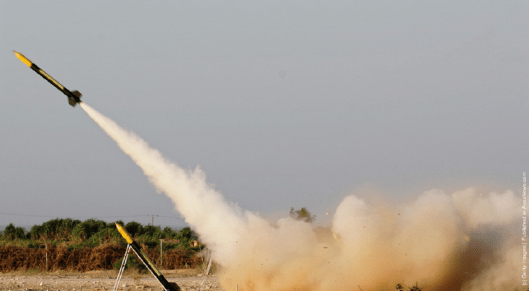
Qassam Rocket [Getty Images]

Following up on an earlier post, some people have asked: is it true that Hamas declares that their intended targets are Israeli soldiers and/or military targets before launching rockets or mortars into Israel, or crossing into Israel through “terror” tunnels? Aren’t all of their attacks intentionally indiscriminate and aim to target civilian population centers?

I cannot claim that every rocket or mortar launch into Israel is preceded by an explicit declaration of a military target simply because finding documented evidence of every instance is impossible, but I can claim that there are multiple instances where they have explicitly declared so, and instances where their rockets or mortars into Israel or cross-border crossings through tunnels specifically killed only soldiers (hard to chalk that up to pure luck; as such, good evidence that the intended target was indeed military in nature). Below, I’ve compiled several examples of such cases.

Also, I can refer to statements by Hamas and the Commander in Chief of the military wing of Hamas (the Qassam brigade) where he explicitly declares that Hamas does not seek to target civilians when engaging in rocket or mortar launches, or crossing into Israel through tunnels, but on the contrary, that their intended targets are military in nature (again, see below).

Finally, I want to also emphasize that the purpose of the post is expository in nature, and that I do not support certain means of resistance that Hamas has (historically) engaged in or their ideology. I do, however, support the right of any oppressed people to engage in (legitimate) armed struggle (i.e. hitting non-civilian targets), which is a right that is broadly acknowledged. In addition, I also support honesty in reporting. Too often, in major Western media and even in reports by respected Human Rights organizations, these things are simply not reported, and the blanket statement that “Hamas indiscriminately launches rockets at civilian population centers” or that “terror tunnels aim to kill civilians” are simply accepted as fact. Judge for yourself.

July 10

  • “Hamas claimed responsibility for the rocket fire on Jerusalem, saying the rockets were aiming for the Knesset.”
  • “Hamas also took responsibility for those attacks, and said it fired its long-range rockets for the first time since fighting began, in an attempt to hit an army base

July 17

  • “Like most other journalists, Jones is ignoring the fact that in their statements, Hamas and other resistance factions regularly declare military targets. As the brilliant Nazareth-based journalist Jonathan Cook often points out, tight Israeli military restrictions on reporting the landing locations of Resistance rockets makes this all hard to verify.”

July 22

  • “كتائب القسام تعلن قصف قاعدة التنصت الإسرائيلية 8200 ب3 صواريخ غراد

Translation: “Qassam battalions declare the rocketing of the 8200 eavesdropping base with 3 Grad missiles”. Note that unit 8200 is the Signal Intelligence (SIGINT) unit of the Israeli Intelligence Corps

July 28

  • “Four Israeli soldiers were killed when a mortar shell fired from Gaza struck southern Israel on Monday, the army said” […] “The Zionist enemy acknowledges that four of its soldiers were killed and 10 wounded in a Qassam shelling in Eshkol,” said a statement from the Ezzedine al-Qassam Brigades, the armed wing of Hamas.”
  • “The four soldiers killed by the mortar belonged to the 7th Armored Brigade. They had been in a staging area in the Eshkol region when they were killed. The mortar attack represented the deadliest incident of cross-border shelling from Gaza since the beginning of the IDF’s operation to suppress Hamas rocket fire and tunnel attacks on southern regions.”

July 29 (this one is related to the “terror” tunnels)

  • “The Hamas-affiliated Al-Aqsa TV broadcasted Tuesday night a video allegedly showing militants of its Al-Qassam brigades attacking an Israeli military base, killing 10 soldiers and attempting to capture one. The video allegedly shows combatants belonging to Hamas’s military wing equipped with machine guns and portable rocket launchers going out of a tunnel and appearing next to what was reported as “an armored enormous military tower,” belonging to the Nahol Aouzunit of the Israeli army.”
  • “Hamas operatives aim primarily to abduct soldiers and not to penetrate into civilian communities along the border with Gaza, a senior intelligence source said Monday” […] The intelligence source, however, said that of the nine cross-border tunnels detected, none actually stretches into the grounds of a civilian community. “They could have gone 500 meters more, into the kibbutz,” he said. “Why didn’t they do that?

July 29 (Statement by Muhammad Al-Dayf)

  • This is the statement of Muhammad Al-Dayf, Commander in Chief of the Qassam Brigades (Hamas’ armed wing) The relevant statement starts at 2:14 in the above youtube video, where he explicitly declares that Hamas targets Israeli soldiers only, and that they do not seek to cause harm to civilians.
  • “The general commander of the Izzedin al-Qassam Brigades, the armed wing of the Palestinian movement Hamas, said that Gaza fighters are only targeting Israeli soldiers and have not sought to hurt civilians […] Thirdly, he stressed that Hamas is targeting Israeli soldiers only, and is not seeking to cause harm to civilians. This is, he adds, despite Israel’s “deliberate” killing of Palestinian civilians”.

August 4

  • We Don’t Target Israeli Civilians’, Claims Hamas

“At the same time, the statement claimed, Hamas is not trying to harm Israelis with its rocket attacks, only military personnel and installations […] During the campaign we tried as much as possible to focus on targeting military personnel, soldiers and officers of the enemy, its military bases and airports, and avoided as much as possible targeting someone who is not a military person,” Hamas claimed”

Indiscriminate Rockets

Tags

, ,

qassam-rocket

Qassam Rocket [Getty Images]

I’ve had several recent conversations with friends and colleagues of mine about Gaza, and there’s one point that constantly comes up about Hamas rockets. I should mention that this point (discussed below) also comes up when reading Western NGO reports, even those that are sympathetic to the Palestinian point of view.

The notion that Hamas rockets are launched indiscriminately has already been discussed and countered, in the sense that Hamas typically declares a military target before launching their rockets. But even if they are willing to acknowledge this (and often they will not because this is not circulated in the Western press), they will argue that given that Hamas knows how crude their rockets are, there is a good chance that the rockets will miss their targets (despite intended military target) and hit a civilian home or a non-military target. Therefore, the argument goes, given the relatively low expected success rate, launching rockets even when declaring a military target is still not acceptable because of the high probability of civilian damage.

Leaving aside the ironical (and tragic) fact that the supposedly more accurate high-tech missiles that Israel launches cause way more civilian damage than crude Hamas rockets, there’s something more sinister (though perhaps unintentional) in the reply above: the implication is that the oppressed have no right to resist through (legitimate) armed struggle because they are poor. In essence, the supposed accuracy of the missiles (or rockets) is license to launch them, and the lack of access to this high-tech supposedly “accurate” technology ablates the possibility of acquiring that license. As such, given that the oppressed are typically resource-deprived and thus poor and are therefore confined to low-tech non-guided rockets, their poverty becomes the reason for the lack of acquisition of this license (to engage in legitimate armed struggle).

To me, it is this conclusion that is unacceptable, and so I ask: in some imaginary world, if Palestinian resistance groups were given the same high-tech weaponry as that possessed by the Israelis, would that change your perspective? Their answer is never a comfortable yes…

Notes from the Gazan Margin

Tags

,

bombed-complex-gaza

Bombed residential complex in southern Gaza [AP]

Crude Hamas rockets are always launched indiscriminately at population centers, while high-tech, guided Israeli missiles always seek to surgically strike Hamas militants or infrastructure. In reality, however, Hamas often declares military targets before launching their rockets (but you need to understand or read Arabic to know that), and sometimes manages to hit these military targets (as they have recently). In fact, Hamas rockets have killed more soldiers than civilians. But if they miss despite intended and declared military target (and they often do), can we call Israeli civilian casualties “collateral damage”? Israel, on the other hand, indiscriminately kills civilians in their supposed surgical strikes on militants or military infrastructure. In fact, despite possessing vastly superior technology (or perhaps because of that), Israel has managed to kill more than 5 civilians for every militant killed. So either Israel is deliberately killing civilians, or Western media that engage in this “fetishization of technology” need to shut up; or both.

A medical surgeon with a success rate equivalent to Israel’s “surgical strike” track record would be sued out of existence instantaneously. I repeat, for every militant killed, more than 5 civilians have been killed: 2 males, 1 female, 2 children. I’m insisting on explicitly pointing that 2 out of 5 are male. Too often, male civilian casualties are literally ignored, or at best, relegated to the margins of mental math, as in 1200 civilians have been killed, including 200 women and 400 children (which these days, is as good as completely ignoring them because no one knows how to do mental math). Do they not warrant explicitly highlighting because they’re males of fighting age, which gasp, implies they could, potentially, in theory, deep-down in their heart of hearts be Hamas terrorists? These victims are stuck in the gray zone.

Speaking of victims, if, for whatever reason, you refuse to or cannot leave your house, your hospital, your school or your UNRWA shelter (which you sought as shelter precisely because you chose to or were able to leave your house, your hospital or your school) despite innocuous, gentle-sounding knock-on-the-roof warnings by your friendly and magnanimous Israeli Defense Forces, you’re a Human Shield and you deserve to die.

I don’t know how many times I’ve seen stories in Israeli media of suicide donkeys and cows dying. We know Israel engages in Pink Washing; are they trying to attract animal activists now?

If we accept the definition of terrorism commonly used in today’s vernacular as the deliberate use of violence (or threat thereof) to enact political ends (and I’m aware of the controversy around this and any definition of terrorism, but the word is used in shaping discourse and therefore needs to be defined somehow to mean something), it’s quite ironic that the creation of the state of Israel is the quintessential example of a state born into existence though terrorism. To be specific, I’m not only talking about Irgun and Lehi terrorism, but pointing to all ethnic cleansing of villages and massacres perpetrated before the declaration of independence in May of 1948 which were instrumental in the creation of the State (which is accepted even by the Israelis as “necessary” to birth the State). I simply don’t see how the latter are not precisely terror acts (they fit the definition to a tee).

Along the above lines, acts such as deliberately engaging in the blockading of a population, deliberately targeting and destroying power plants and/or waste water treatment facilities are acts of terror. Indeed, per the commonly accepted definition above, there is no restriction on the nature of the actor: as such, a state can engage in acts of terror; and there is no restriction on the nature of the violence: as such, this violence can be direct, as in the deliberate targeting of civilians for political ends, or indirect, as in the deliberate restriction of movement of goods (blockade) or the deliberate targeting of infrastructure (power plants, waste water treatment facilities) that (indirectly) targets civilians for political ends, in the sense that the intended goal is to make life miserable enough for the civilian population (and often leads to death) in order to put pressure on them to reject their rulers. Along those lines, why is “collective punishment” not explicitly labeled as terrorism?

Hamas uses their network of tunnels to smuggle food and basic goods into Gaza (because you know, Gaza has been under blockade for 7 years), weapons (including rockets) and as a means to infiltrate into Israel to kill Israeli soldiers (not a single civilian has been killed in 7 years by virtue of these tunnels, but many Israeli soldiers have). As long as Hamas declares a military target when they launch their rockets into Israel (which as mentioned above, they often do), will the media re-label these “terror tunnels” as “legitimate resistance tunnels”?

I haven’t heard a single liberal Western interventionist cry out that NATO needs to intervene to stop the massacres going on in Gaza. Remember those days when every talking head on TV was asking the U.S. and NATO to act to prevent the inevitable Benghazi massacre about to be committed by Gaddafi? Remember the philosophical discussions around Responsibility to Protect (R2P) and Humanitarian Interventionism? Just remember that the Palestinian Cause is *the* litmus test par excellence in revealing hypocrisy.

What you can do to help Gaza

Tags

,

we-are-all-gaza

We are all Gaza

Many people who have been shocked by the brutality of this latest Israeli attack on Gaza have asked: what can we do to help? I think that’s a fair question, and one that deserves to be answered as broadly as possible. There are multiple ways to help, and I’ve tried to compile a list that offers a broad set of options that you can choose from below (note that this list was motivated and inspired by a nice list made by an anonymous person and shared by Alex Reza). Depending on how much time and effort you’re willing to commit, you can choose to participate in one or many of these options, and every little helps. I don’t pretend that the list below is comprehensive or incorporates every possible means of helping. As such, if you feel strongly about options that are not included, by all means, copy/paste, add that to the list and then share. Also, if you disagree with certain options, feel free to copy/paste and remove these options and then share. Either way, share as widely as possible, subject to your personal sensibilities.

1) Educate yourself

I can’t emphasize this one enough. There are many resources available to you to learn more about the Palestinian Israeli “conflict”, and understanding the history of the “conflict” is critical. Context matters. This latest brutal attack didn’t happen in a vacuum. There are underlying reasons that go back in time that are critical to understand in order to better contextualize why this “conflict” persists, and why this attack (only the latest one on Gaza) happened. I’m tired of US mainstream media (in particular) erasing, censuring or avoiding context and turning the discussion into cliches like “cycle of violence” that insist on a false sense of “balance” between two parties seemingly at war. In reality, this is a “conflict” between a people that has been ethnically cleansed, dispossessed, refugized and occupied, resisting an oppressor who continues to insist on defining the victim as victimizer. Here’s a good graphical primer to get started and that gives that much needed historical context.

a) News Sources and Analysis

Electronic Intifada
Maan News Agency
Jaddaliyya
AngryArab
Informed Comment

b) Documentaries / Movies / Clips

Here’s a good 5 minute video to get started.

Films for action has a good list of documentaries.

I strongly recommend “Palestine Is Still the Issue”, “5 Broken Cameras” and “The Israeli Lobby”. Also, even though they did not make the top 10 in their list, “Tears in Gaza”, “Death in Gaza” and “Occupation 101” are very good. The other films are also not bad and give you different angles to the conflict.

c) Books

Harms & Ferry “The Palestine Israel Conflict: Basic Introduction

Pappe, Ilan “A History of Modern Day Palestine: One Land, Two People

Said, Edward “The Question of Palestine

Neumann, Michael “The Case Against Israel

Abunimah, Ali “One Country

Mearsheimer & Walt “The Israeli Lobby and US Foreign Policy

Masalha, Nur “Expulsion of the Palestinians: The Concept of “Transfer” in Zionist Political Thought

Morris, Benny “Righteous Victims: A History of the Zionist-Arab Conflict-, 1881-2001

Khalidi, Walid “From Haven to Conquest: Readings in Zionism and the Palestine Problem Until 1948

2) Outreach and Education

a) Social media. Spreading the word though social media is a great way to disseminate points of view and information. Most people get their news from Facebook or Twitter these days, so take advantage of that. Having said that, some important words of caution:

Please make sure that the information that you provide is first and foremost accurate. Too many times, people unfortunately share images that are not from Gaza (they may be from Iraq or Syria, for example), or videos that are old but are pitched as new (they may be from previous attacks on Gaza, for example), or simply videos or images that are fakes or doctored (photo-shopped images or edits and dubs that give the impression someone is saying something that is not true, for example). Of course, people don’t do it on purpose, but it’s our responsibility to check to make sure we’re sharing accurate information. Sharing inaccurate information doesn’t help on two fronts. First, by definition, it is information that is not representative of reality (whether the person sharing it knows or doesn’t know). Second, it serves to undermine your credibility, which is your most important asset. Finally, the truth is brutal enough, and as such, is more than enough in getting your point across.

Contextualize and explain what you’re sharing. It doesn’t help if you simply post an image of a dead child. Who is this child? How did he or she die? What is the name of the child? What were the circumstances of his or her death?

b) Call your representatives. This may or may not be effective depending on where you live, but is still worth engaging in given the small effort this requires. For people in the US, the following link allows you to simply input your zip code in order to find out who represents you both in the House and in the Senate. You can also call the Whitehouse at the following number 202-456-1111. Feel free to add information for the country you live in.

c) Talk to people. In this age of technology, we simply don’t do this enough. Many people are curious about the situation and what’s going in Gaza right now, so take every opportunity to discuss this with them if they express interest. Invite them for lunch, dinner, or simply coffee. I’ve found that a 1 on 1 discussion is the most effective way of conveying information to people who are interested. Yes, it’s only one person at a time, but the quality of information uptake is second to none, and every person counts.

3) Participate in local protests, vigils and “solidarity events”

Depending on your availability and the timing of these events in your local area, try to make some of these (and I know it’s hard sometimes, and I’m just as guilty as anyone else for missing some of these). This helps on several fronts: first, it demonstrates solidarity with the people of Gaza that are under constant bombardment, which helps them know that they are not alone in this struggle; second, it demonstrates to your local community that there is an opposition to the actions of Israel, and may also lead them to get interested in learning more about the “conflict”; third, it puts pressure on your local representatives to acknowledge the existence of this opposition, which may help in putting pressure on politicians to “do something” (especially here in the US); finally, if media is present, it allows your message to be broadcast to a much wider audience that may otherwise be oblivious to the situation.

4) Donate Money

Donating money is a great way to contribute to alleviating some of the suffering that the people of Gaza are currently undergoing. Every little helps. The United Nations Relief & Work Agency for Palestinian Refugees in the Near East (UNRWA) has launched a Gaza emergency appeal here.

Other well-respected non-profits include (Thanks Lena):

MAP UK
Welfare Association
Palestinian Children Relief Fund

Some other non-profits recommended in Alex Reza’s list:

Middle East Children’s Alliance
Palestinian Center for Human Rights
American Near East Refugee Aid (ANERA)
United Palestinian Appeal

5) Boycott, Divestment and Sanctions (BDS)

This section is taken from the BDS section of Alex Reza’s list:

Boycott, divestment, and sanctions (BDS) is a movement that was called for by Palestinian civil society. It is a grassroots, nonviolent form of resistance that there are so many ways to participate in.

Here is the Palestinian Civil Society Call for Boycott, Divestment, and Sanctions.

Divestment:
Get involved with (or start) a campaign for your university, workplace, union, etc. to pull out its investments in companies that are connected to Israeli human rights offenses.
Students for Justice in Palestine (SJP) has led many successful divestment campaigns at universities across the country.
We Divest is a project of Jewish Voice for Peace, which has successfully pressured TIAA-CREF around its occupation investments.

Consumer Boycott:
Here is a quick list of companies that profit from Israeli human rights offenses. Consumer boycott is about individually deciding not to buy these products, but it’s also about popular education. Flyering to educate people about what’s behind this stuff. Encouraging local shops not to sell these products.There are ongoing successful consumer boycott campaigns against SodaStream and Sabra Hummus, for example.

Cultural and Academic Boycott:
As artists and academics, it’s very important that we decolonize the way we produce our work, and don’t let it be used to normalize violent structures.
There is a set of guidelines for cultural and academic boycott from the Palestinian Campaign for the Academic and Cultural Boycott of Israel (PACBI) that artists and academics can sign on to.
Academic boycott guidelines
Cultural boycott guidelines
If you are an Israeli citizen, you can also sign the Boycott from Within statement, and get involved with their work.

An excellent resource, which can help you find information for whichever kind of BDS campaign you decide to get involved with, is the Who Profits? database.


An Ode to Zionism

Tags

, ,

ethnic-cleansing-palestine

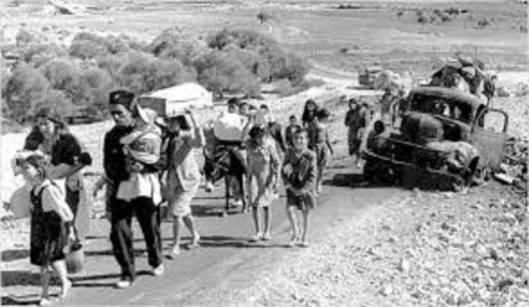
Palestinian refugees flee Galilee in the fall of 1948 (Fred Csasznik)

You create a movement grounded in ethnic supremacism.

You conspire with imperialist powers to take that which is already taken.

You implement exclusionist and racist policies of land and labour.

You terrorize. You kill. You ethnically cleanse.

You prevent those whose land and homes you took from taking them back.

You dispossess. You refugize. You occupy.

You occupy and you burn down the olive trees. You demolish homes. You restrict movement. You torture. You blockade. You collectively punish.

You undignify. Oh how you relish taking away men and women’s dignity.

You pauperize and you ghettoize. You bantustanize. Apartheid? What’s that?

You meet rocks with bullets and courage with cowardice. Cowardice from the sea, the air, the land. You rain bombs on civilians and you dare trumpet your morality. You call us terrorists. You? Victims.

You want to live in Peace. But without Justice, there can be no Peace. And so we resist. And we resist. And we resist. And we will continue resisting until Humanity’s collective soul sees you for what you truly are. Labels you as the oppressor that you are. Perhaps then, you may be forced to right the historical wrongs that you have committed. Perhaps then, we can talk about real Peace. But until then, we refuse to stay silent. We refuse to disappear. We refuse to accept your conditions and we refuse to be subjugated to your suffocating will. And so we resist, each one of us in our own little way.

Trayvon Martin vs. George Zimmerman

Tags

, ,

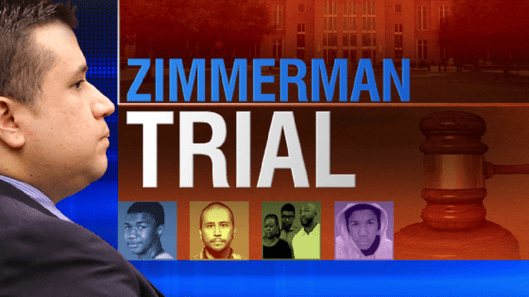
zimmerman_trial

So I finally had a chance to look into the details of the Martin vs. Zimmerman case. It seems to me, after much reading and thought, that the jury reached the correct verdict in acquitting Zimmerman of the charge of second degree murder and manslaughter. Furthermore, I don’t believe it is fair to say that the jury was racist or prejudiced in arriving at their acquittal. There is no evidence that they were, and there is good evidence to support the not-guilty verdict based on the existing laws on the books and the judge’s instructions to them (as to how the laws were to be interpreted and what parts of the law were to be discarded). As such, it is unfair to say that they were motivated by anything other than evidence, laws and their interpretation (through the judge’s instructions).

To be clear, just because I think the jury was correct in acquitting Zimmerman doesn’t mean that I consider Zimmerman to be (morally) innocent; simply, that there was reasonable doubt as to whether he was guilty of second degree murder or manslaughter per the laws on the books and per the judges’ instructions. Zimmerman, the person, does seem to be a creepy wannabe failed policeman, and it does seem somewhat plausible to assume that he pursued Martin because of his prejudice about what a “suspicious” person looks like, which seems to have “precipitated” the confrontation that ended up costing Martin his life. As such, the intuition rebels against the notion that such a person who behaved in this fashion and that ended up killing an innocent 17 year old who was originally minding his own business could be left unpunished by the legal system. As sympathetic as I am to this intuition, the laws on the books and the judge’s instructions make for a strong case in acquitting Zimmerman. As such, it makes you think about the laws more than anything (and I’m not talking about Stand Your Ground, which I believe is irrelevant to this case, as discussed below).

Finally, I know this case has inflamed passions on both sides, so I know that by virtue of arriving at any conclusion, some people are going to be upset, regardless of how well reasoned your case is. Having said that, I’m obviously no legal expert, so if you disagree with my reasoning, I’m glad to entertain counter-arguments with whomever objects.

With that as a preface, let’s start by examining Zimmerman’s claim of self-defense, which was used to get an acquittal. The defense argued that at the moment right before lethal force was used, Zimmerman was on his back being pounded into the cement by Martin, and given that he reasonably believed that he faced great bodily harm or the threat of death, he was justified in shooting Martin in self-defense.

So then the question is this: was Zimmerman truly in a situation where he was facing grievous bodily harm or death at the time lethal force was used? Now, we’ll never know what exactly happened that night, but the prosecution had to prove beyond a reasonable doubt that Zimmerman was not in a situation at the time lethal force was used where he reasonably believed that grievous bodily harm or death could result, for a guilty verdict of second degree murder or manslaughter to be upheld. Given that the forensic evidence and eye/ear witness accounts seemed to support Zimmerman’s version of the story, the prosecution’s case was next to impossible: clearly there was reasonable doubt.

Interestingly, the defense never used the Stand Your Ground clause, and it was never brought up by the prosecution during the trial either.The reason why Stand Your Ground wasn’t invoked was because the defense argued that he had no option to flee when he was (supposedly) on his back with Martin on top pounding him. As such, given that they argued that there was no option to flee at the time the deadly force was used, the Stand Your Ground provision is irrelevant. Even in “Duty To Flee” states, if retreat is not an option, you are justified, in self-defense, to use deadly force if you reasonably believe that you are facing great bodily harm or death. To show this, take a look at the relevant language after the Stand Your Ground Law was enacted in Florida in 2005:

“In deciding whether George Zimmerman was justified in the use of deadly force, you must judge him by the circumstances by which he was surrounded at the time the force was used. The danger facing George Zimmerman need not have been actual; however, to justify the use of deadly force, the appearance of danger must have been so real that a reasonably cautious and prudent person under the same circumstances would have believed that the danger could be avoided only through the use of that force. Based upon appearances, George Zimmerman must have actually believed that the danger was real.

If George Zimmerman was not engaged in an unlawful activity and was attacked in any place where he had a right to be, he had no duty to retreat and had the right to stand his ground and meet force with force, including deadly force if he reasonably believed that it was necessary to do so to prevent death or great bodily harm to himself or another or to prevent the commission of a forcible felony.”

And the language before the law was enacted:

“In deciding whether defendant was justified in the use of force likely to cause death or great bodily harm, you must judge him by the circumstances by which he was surrounded at the time the force was used. The danger facing the defendant need not have been actual; however, to justify the use of force likely to cause death or great bodily harm, the appearance of danger must have been so real that a reasonably cautious and prudent person under the same circumstances would have believed that the danger could be avoided only through the use of that force. Based upon appearances, the defendant must have actually believed that the danger was real.

The defendant cannot justify the use of force likely to cause death or great bodily harm unless he used every reasonable means within his power and consistent with his own safety to avoid the danger before resorting to that force. The fact that the defendant was wrongfully attacked cannot justify his use of force likely to cause death or great bodily harm if by retreating he could have avoided the need to use that force. However, if the defendant was placed in a position of imminent danger of death or great bodily harm and it would have increased his own danger to retreat, then his use of force likely to cause death or great bodily harm was justifiable.”

Clearly then, if retreat was not an option as the defense argued, then we arrive at the same conclusion whether “Stand Your Ground” or “Duty to Flee” clauses are at play. To counter this, the prosecution, under a hypothetical “Duty to Flee” scenario, would have had to show beyond reasonable doubt that Zimmerman could have retreated at the time lethal force was used. Again, given that the forensic and eye/ear witness accounts seem to corroborate Zimmerman’s story that he was pinned underneath Martin and that he was being pounded from up top, it’s next to impossible to make the case beyond reasonable doubt that he could have fled (see here and here).

Furthermore, to preempt some of the commonly made objections that Stand Your Ground did indeed play a role in the verdict (contra what I said above), I will state that yes, it was in the judges’ instructions, and that yes, juror B-37 did mention Stand Your Ground in the Anderson Cooper interview.

But just because it was in the instructions doesn’t mean it was relevant to the case; to wit, the Castle Doctrine was also in the judges’ instructions, and clearly had nothing to do with the case as the crime scene happened outside of anyone’s house. Furthermore, regarding juror B-37, it seems that his invocation of Stand Your Ground and his description of it and his reasoning are at odds, as the seems to be describing plain old self-defense.

So far, I have avoided focusing on the fact that Zimmerman stalked Martin because he thought he was suspicious, or that his pursuit of him “provoked” the confrontation that ensued (given that you have a creepy male trailing you in a car, and then on foot, in the middle of a rainy night). Could one not argue that since Zimmerman provoked the confrontation, surely he could not invoke “self-defense”? As it turns out, Florida does have a clause in the law that would prevent the aggressor (the one that “started it”) from claiming self-defense if lethal force was used against someone.

The problem, however, is 3-fold:

1) It is not clear how “aggressor” is defined. It seems to be commonly interpreted as the use of force or the threat of force against someone else. Given that pursuing someone (even if the police dispatcher says: “we don’t need you to do this”) is not illegal and not necessarily tantamount to using force or the threat of force, I’m not sure that Zimmerman would have been viewed as the aggressor per this clause in the law (even though he clearly “provoked”, in some sense, the ensuing confrontation); see here and here.

2) Even if it could have been hypothetically proven that Zimmerman was the aggressor, the judge dismissed the use of this clause in his instructions to the jurors. As such, the jurors never had a chance to consider this part of the law in the first place.

3) Finally, even if Zimmerman was hypothetically deemed to be the aggressor and the judge had allowed the clause in the instructions, there is an exception to the clause that no deadly force can be used by the aggressor, and that is if the aggressor has no option to retreat and is being subjected to grave bodily harm or death (see 2a in statute 776.041, linked above). As such, we’re back to the notion of proving beyond reasonable doubt that Zimmerman could have actually fled when the use of lethal force occurred (and that he was the aggressor on top of that); quite the difficult task.

In conclusion, this case is the definition of a tragedy. A sequence of events where a 17 year old kid that lost his life in circumstances that did not need to happen because of behavior that could have been avoided, for which there is no real recourse within the law. Not sure how you remedy this in the future.