Issa El-Issa (1878 – 1950) was a Palestinian Greek Orthodox Christian from Jaffa and an important journalist who founded and managed the Falastin (Palestine) newspaper. Growing up between Palestine and Lebanon, he graduated from the American University of Beirut, and worked various odd jobs in journalism (and non-journalism) until he founded Falastin, turning it into one of the most widely-read and influential Palestinian newspapers in the first half of the twentieth century (along with Al-Karmil, owned and edited by Najib al-Khuri Nassar). Two themes would dominate Issa El-Issa’s life, and by extension, the pages of Falastin: his advocacy for the Arab Orthodox Movement in their struggle to increase Arab representation and influence within the Greek-dominated Orthodox Patriarchate of Jerusalem, and the Zionist colonization of Palestine.
The first issue of Falastin was dated January 14th 1911, with the newspaper being published twice a week in Jaffa (which, at the time, was part of the Jerusalem Mutasarrifiyah in the Ottoman Empire). El-Issa’s cousin, Yusuf El-Issa, served as Falastin’s editor-in-chief in its early years until 1914 (Issa El-Issa assumed those responsibilities afterwards), with the newspaper espousing an “editorial policy [that] was progressive as it fought against fanaticism, sectarianism, bigotry and ignorance. Its editors espoused Ottomanism and secularism and adopted an inclusive approach considering all inhabitants, irrespective of their ethnic or religious background, equal members of the Ottoman nation1”. Issa El-Issa would go on to publish Falastin until 1938, when he was forced into exile (to Beirut) because of death threats made by the supporters of the Mufti of Jerusalem al-Hajj Amin al-Husayni during the Great Arab Revolt (1936-1939), with his house and belongings set on fire and destroyed. Although he was associated with Raghib Al-Nashashibi – a rival of the Mufti – he had “nothing positive to say about [him] during the part of his memoir devoted to the latter years of his life2”, and withdrew from Al-Nashashibi’s National Defense Party in 1939. After his exile, his son Raja El-Issa would continue publishing Falastin in Jaffa until April 1948, when Zionist forces took over the town. The newspaper was moved to Jerusalem afterwards, and continued to be published until March of 1967.
Falastin was originally established to lend a voice to the struggle of the Arab Orthodox Movement against the Greek clergy of the Orthodox Patriarchate of Jerusalem, who dominated the upper hierarchy of the Orthodox church throughout the Ottoman empire. The goal of the movement was to empower the native Arab Christians “in the higher reaches of the clergy as well as [to secure] a greater share for the laity of the church’s substantial land and economic resources”. The newspaper was suspended twice in those early years for criticizing the Greek Brotherhood of the Holy Sepulcher. It is noteworthy that the two key topics discussed in Falastin and that would go on to dominate Issa El-Issa’s life – the monopoly on the upper echelons of the Orthodox Patriarchate of Jerusalem by the Greek Brotherhood of the Holy Sepulcher, and the Zionist colonization of Palestine – became interrelated when the Patriarchate, which owned significant holdings of land in Palestine, likely sold land to Zionist buyers, as discussed in the 1914 Falastin article “The Zionists and the Religious Endowments of the Greek Orthodox Monastery” (as a side note, the Patriarchate, whose upper echelons are still dominated by the Greek clergy today, found itself mired in controversy in 2005 when the former Patriarch Irenaios I was dismissed from his position after selling land to Israeli investors).
Interestingly, in his book From Ambivalence to Hostility, Emanuel Beska convincingly argues that Falastin was initially ambivalent towards Zionism when it was founded in 1911, providing space for both pro and anti-Zionist voices early on, with Issa El-Issa and his cousin purposely not taking part in the discussion and maintaining neutrality. The first shift in Falastin’s editorial policy towards Zionism occurred in mid-1912 as a result of several incidents that raised awareness in the editors’ minds about the exclusive nature of the Zionist project, in particular, the discrimination in the admission of non-Jewish Palestinian students to Miqve Yisrael, “an agricultural school founded in 1870 by Charles Netter [that] was part of the system of educational institutions run by the Alliance Israélite Universelle3”. As an Ottoman school, Miqve Yisrael had an obligation to accept students of all faiths – an obligation it had failed to fulfil – and several articles in Falastin were devoted to discussing this issue over two months, with the editors taking a firm stance in support of an inclusive admission policy. By mid-1913, the tone of the newspaper had become more hostile towards Zionism as a result of two incidents that made Zionist territorial ambitions clearer to the editors of Falastin – specifically, attempts to purchase the former estates of Sultan Abdulhamid II, which consisted of about three percent of Palestine’s land area, and the Eleventh Zionist Congress, which took place in Vienna in September 1913. Both of these events seemed to have caused a substantial shift in the editorial policy of Falastin, especially the latter, with significant space in the newspaper dedicated to analyzing speeches made at the Congress, ultimately persuading the editors of the existential danger that Zionism posed. After that point, Falastin established itself as one of the fiercest voices against Zionist colonization of Palestine, and the newspaper was suspended in the spring of 1914 and Issa El-Issa was put on trial based on the claim that an article (titled “Advice”) provoked animosity towards Jews. Issa El Issa successfully and valiantly defended himself and the newspaper, arguing that the article criticized not Jews, but Zionists, stating that “we have repeatedly defended it [Judaism] and many times rebutted what was attributed to it […] when we said ‘Zionists’ we referred to the political organization with its headquarters in Europe which aims for the colonization of Palestine, the usurpation of its lands and its transformation into a Jewish homeland4”.
Issa El-Issa was a Palestinian patriot, and a believer in a complementary pan-Arab identity, and his newspaper reflected that. As Rashid Khalidi has remarked in his book The Iron Cage, Falastin was a “journalistic pioneer of an unwavering opposition to Zionism on both the Palestinian and Pan-Arab levels. It deserves the attention it has begun to receive as an important organ of opinion in pre-1948 Palestine, and one of the foremost Palestinian papers to have an impact on the rest of the Arab world, as does its editor, Issa El Issa5”. El Issa also lived that dual identity. After the Ottomans shut down Falastin during World War I and exiled Issa El-Issa and his cousin to a remote area of Anatolia (where he was able to develop good relationships with the locals by virtue of his mastery of the Arabic language, and his ability to cite the Quran and the Hadith), he was sought after by the Hashemite King Faisal to head his diwan in the short-lived Arab Kingdom of Syria (1918 – 1920), which he did until the Kingdom’s defeat in July 1920. Although his relationship with the Hashemites was complicated, his ultimate loyalty was always to Palestine, often at the expense of his professional and personal life. He spared no one in his defense of Palestine, not only methodically exposing Zionist machinations to take over the land, but also ruthlessly criticizing the British for enabling it (Falastin was shut down numerous times by the British authorities during the Mandate period), as well as the Palestinian national leadership for failing to effectively oppose it. After pushing for the interrelation of the Arab and Palestinian arenas for most of his life as a mechanism to thwart Zionist ambitions in Palestine, he was forced to admit that Arab leaders, just like the Palestinian national leadership, were ineffective and could not be counted on. His faith in Arab leadership to save Palestine was lost after the Nakba of 1948, after which he wrote the following verses:
“Oh little kings of the Arabs, by the Grace of God
Enough feebleness and infighting
Once upon a time our hopes were on you
But all our hopes are dashed6”.
Issa El-Issa died on June 29th 1950 in Beirut, having never returned to Palestine after his self-imposed exile in 1938. Last month, we celebrated the recent passing of the 75th anniversary of his death in the shadow of another Nakba, as the genocide being perpetrated by Israel against the Palestinian population in Gaza shows no sign of abating. As we continue to witness in horror the daily annihilation of innocents in Gaza, we can’t help but wonder what trenchant verses Issa El Issa would reserve not only to those Arab governments that have failed the people of Gaza, but also to the broader “international community”, for once upon a time our hopes were on you, but all our hopes are dashed.
Sources:
[1] Beška, Emanuel, From Ambivalence to Hostility: The Arabic Newspaper Filastin and Zionism, 1911-1914, Ústav orientalistiky SAV, 2016 (p.3)
[2] Khalidi, Rashid, The Iron Cage, Beacon Press, 2006 (p.101)
[3] Beška, Emanuel, From Ambivalence to Hostility: The Arabic Newspaper Filastin and Zionism, 1911-1914, Ústav orientalistiky SAV, 2016 (p.47)
[4] Beška, Emanuel, From Ambivalence to Hostility: The Arabic Newspaper Filastin and Zionism, 1911-1914, Ústav orientalistiky SAV, 2016 (p.72)
[5] Khalidi, Rashid, The Iron Cage, Beacon Press, 2006 (p.94)
[6] Khalidi, Rashid, The Iron Cage, Beacon Press, 2006 (p.100)
The genocide being perpetrated by Israel against the Palestinian population in Gaza shows no sign of abating. Nearly twenty-one months have passed since October 7th 2023, and Israel continues to kill and maim with impunity. According to the latest figures released by the Gaza Ministry of Health on July 2nd 2025, Israel has killed at least 57,012 Palestinians and wounded 134,592 (of the identified fatalities, 55% were women, children and elderly, although it is important to note that the number of total fatalities reported by the Gaza Ministry of Health is surely an underestimate). According to the United Nations Office for the Coordination of Humanitarian Affairs (OCHA), more than four fifths (85%) of the Gaza Strip is currently within the Israeli-militarized zone, under displacement orders, or both, and at least 1.9 million people (or about 90% of Gaza’s population) have been displaced during the “war”, per UNRWA. Nearly three quarters (70%) of all structures in Gaza have been damaged or destroyed per UNOSAT’s latest assessment conducted on April 4th 2025, and almost all (92%) housing units have been damaged or destroyed according to the Gaza Ministry of Public Works and Housing.
Who is responsible for this calamity? The obvious answer is the government of Israel, led by Netanyahu and his coalition, backed by the US and other Western powers. However, focusing on Netanyahu and his coalition misses an important dynamic in this ongoing genocide, and one that is rarely discussed in the mainstream Western press: the role of Israeli society, and more specifically, Israeli Jewish society (as opposed to Israeli Arabs or Palestinian citizens of Israel) in support of official Israeli government policy. The truth is that Israel’s “war” on Gaza has been supported by the (vast) majority of the Israeli Jewish public, and policies that are tantamount to ethnic cleansing as well as outright genocidal policies, such as the prevention of humanitarian aid into Gaza, are not merely Israeli government policy, but a reflection of the broader views of a majority of Israeli Jews. When US Secretary of State Anthony Blinken (one of the chief architects of US policy in support of Israel’s genocidal assault on Gaza) gave his interview to the New York Times on January 4th 2025 a few weeks before departing office, he made this exact point when he stated that these types of policies after October 7th weren’t just advocated by “the prime minister or a given leader in Israel. This was an entire society that didn’t want any assistance getting to a single Palestinian in Gaza”. Blinken re-iterated this point in an interview with CNN on January 15th 2025, where he stated that “what’s been misunderstood around the world is ascribing to one individual or maybe a small group of individuals the policies that Israel is pursuing that many people don’t like. I think this is a reflection of 70, 80, 90 percent of Israelis”.
The empirical evidence supports Blinken’s assessment, and the purpose of this article is to examine in a comprehensive manner the views of Israeli Jews vis a vis the ongoing genocide in Gaza. This was done by collecting every available public survey conducted after October 7th 2023 (till the present) and that posed at least one question to Israelis related to the ongoing genocide of Palestinians in Gaza. The surveys were then examined, and only those surveys whose data was available and that were based on a representative sample of Israeli society were included (in some cases, the sample was provided as part of the survey; in other cases, the author had to rely on a statement from the survey assessor that it was representative). A subset of questions within those surveys that met these thresholds were focused-on for this article, specifically around the views of Israeli Jews on the IDF’s “performance” in Gaza, on the suffering of Palestinian civilians in Gaza, and on a variety of Israeli government policies vis a vis Gaza, including the blocking of humanitarian aid into the Strip and the ethnic cleansing of Gaza (note that all survey questions and responses in this article are transcribed in Italic). A comprehensive database created by the author containing all the relevant survey questions and responses for this article can be found here (a total of 71 surveys and 128 questions are included, although the database captures additional questions that are not covered in this article, such as Israeli views on settlements in Gaza, solutions to the Palestinian Israeli “conflict”, the Israeli war on Lebanon, and so on). In addition, the original set of survey questions and responses can be found here.
Note: The author has focused on the views of Israeli Jews as opposed to Israeli Arabs or Palestinian citizens of Israel because their opinions are the ones that really matter within the context of Israeli government policy. As such, the views of Israeli Arabs or Palestinian citizens of Israel were not collected in the database nor discussed in the article, although they are available as part of the original set of questions and responses. Based on these responses, their views on the vast majority of the questions related to these aforementioned topics tended to be opposite to those of Israeli Jews.
On Israel’s Conduct of the “War” in Gaza
Infamously, when Israeli Jews were asked in a Tel-Aviv University survey taken over the period of October 23rd – 28th 2023 how would you characterize the IDF’s use so far of its firepower in Gaza, a near unanimity (94.1%) believed that the IDF was either using too little (57.5%) or an appropriate (36.6%) amount of firepower, while only a vanishingly small minority (1.8%) responded with too much use of firepower. By October 28th 2023, according to the Gaza Ministry of Health, Israel had killed at least 7,703 Palestinians (of whom 66% were women and children) and wounded an additional 19,743 people, making the average Palestinian casualty rate in Gaza nearly 1,250 per day in a span of three weeks since October 7th. Even more shockingly, more than four out of ten (41%) of those killed were children (accounting for 3,195 fatalities), prompting the NGO ‘Save the Children’ to state that “the number of children reported killed in just three weeks in Gaza is more than the number killed in armed conflict globally – across more than 20 countries – over the course of a whole year, for the last three years”.
When participants in that same survey were asked how do you assess the performance of the IDF in [the] Swords of Iron war so far, the vast majority of Israeli Jews (78.3%) rated it as very good or moderately good, with only a small minority (20.5%) rating their “performance” as either not so good or poor (one has to wonder whether the latter group overlaps with the group who thought too little use of firepower was being used). Support for the IDF’s “performance” did however improve by early November. In an Israeli Democracy Institute (IDI) survey taken over the period of November 5th – 6th 2023, participants were asked, on a scale from 1 = very poor to 5 = excellent, what grade would you give the IDF combat forces for their functioning during the war until now. Among Israeli Jews, a near unanimity (92.6%) chose either excellent or very good, with a vanishingly small number (0.9%) choosing very poor or poor.
Tel-Aviv University released another survey conducted over the period of January 8th – 15th 2024, and asked the same question again about the IDF’s use of firepower, with similar results. A nearly identical amount (94.2%) believed that the IDF was using too little (43.4%) or an appropriate amount of firepower (50.8%), with only a small minority (3.2%) responding with too much use of firepower. By January 7th 2024, Israel had damaged or destroyed 69,146 structures in Gaza according to UNOSAT’s satellite imagery analysis, corresponding “to around 30% of the total structures in the Gaza Strip and a total of 93,800 estimated damaged housing units”.
In that same survey, participants were also asked whether the number of casualties on the Palestinian side [had] been justified or unjustified in order to achieve the war aims. Among Israeli Jews, an overwhelming majority (87.4%) answered justified, versus a tiny minority (6.2%) who answered unjustified. According to Gaza’s Ministry of Health, by January 7th 2024, Israel had killed at least 23,084 Palestinians and wounded 58,926 since October 7th, with the “daily death rate in Gaza [an average of over 250 killed per day by January 7th] higher than any other major 21st century conflict”, according to Oxfam.
Despite the overwhelming level of destruction and loss of life in Gaza (or perhaps because of it), in an IDI survey taken over the period of January 14th – 17th 2024, when participants were asked how would you rate the performance of IDF forces during the war until now, an overwhelming majority of Israeli Jews (88.4%) responded either very good or quite good, with only a small minority (9.8%) responding not so good or not at all good.
A few months later, in a Pew Research survey taken over the period of March 3rd – April 4th 2024, still only a tiny minority of Israeli Jews (4%) believed that Israel’s military response against Hamashad gone too far. By March 1st 2024, Israel had killed and wounded over 100,000 Palestinians in Gaza according to Gaza’s Ministry of Health, displaced over 1.7 million people per UNRWA (over 75% of the population), and damaged or destroyed 35% of the total structures in Gaza, per UNOSAT.
Most of that destruction and killing came at the hands of the Israeli air force, which in mid-April 2024, still garnered massive support from the vast majority of the Israeli public. Indeed, in an Institute for National Security Studies (INSS) survey taken over the period of April 11th – 14th 2024, and in response to how would you rate the Israeli Air Force’s performance since the start of the war, an overwhelming majority (86%) of Israeli Jews gave it a high score, with only a tiny minority (3%) giving it a low score. Interestingly, when participants in that same survey were explicitly asked do you agree or disagree that when undertaking military operations, the IDF should ensure that it is not breaking international laws and rules of war, less than a majority of Israeli Jews (46%) responded that the IDF must comply with international law, while a nearly similar amount (42%) responded that the IDF did not need to comply.
By July 2024, the already catastrophic situation in Gaza had only further deteriorated, with record-levels of destruction being wrought by Israel. In a comprehensive assessment conducted by UN-HABITAT and the UN Environment Program (UNEP), based on satellite imagery analysis provided by UNOSAT, it was revealed that as of July 6th 2024, 151,265 structures had been damaged or destroyed (corresponding to 63% of total structures in Gaza), with the “total debris generated by the conflict amount[ing] to approximately 41,946,018 metric tonnes” (or 114 kilograms of debris for each square meter in Gaza); this corresponds to a “volume of debris that is 14 times greater than the combined total from all conflicts over the past 16 years”. Furthermore, according to the Gaza Ministry of Health, as of July 24th 2024, Israel had killed at least 39,145 people in Gaza and wounded another 90,257 (of the identified fatalities, 60% were women, children or elderly). Despite that, in a joint survey conducted over the period of July 18th – 29th 2024 between Tel-Aviv University and the Palestinian Center for Policy and Survey Research, when participants were asked whether they thought what Hamas did on Oct 7 justifies what Israel did in the Gaza Strip since that time, an overwhelming majority of Israeli Jews (84%) answered either definitely yes or probably yes, with only a small minority (13%) answering definitely no or probably no. In that same survey, participants were also asked whether the number of casualties on the Palestinian side [had] been justified or unjustified (presumably in order to achieve Israel’s “war” aims), with more than three quarters (76%) of Israeli Jews saying they were justified, versus a small minority (15%) saying they weren’t.
Support for Israel’s military among Israeli Jews as it continued to commit genocide in Gaza also extended to protecting Israeli soldiers from facing justice for the crimes of sexual abuse and torture of Palestinian detainees. In a highly publicized incident of gang-rape of a Palestinian detainee at the Sde Teiman military base (turned detention camp and torture facility where systematic human rights abuses against Palestinian detainees have been widely documented), ten Israeli soldiers belonging to a unit known as Force 100, in charge of guarding the facility, were arrested for the rape on July 29th 2024 (with five soldiers subsequently released). Scenes of Israeli protesters breaking into the facility the following day to try to free the arrested soldiers were widely televised, and a debate in Israeli media ensued about the “virtue” of raping detainees. This is the context, then, for a question posed in an INSS survey taken over the period of August 8th – 11th 2024 about the arrested Israeli soldiers in the Sde Teiman case. The survey states that the military prosecutor recently asked to extend the detention of the five soldiers suspected of severe abuse and clarified that there is further evidence strengthening the suspicions against them. It then asks how these soldiers should be disciplined. Nearly two thirds of Israeli Jews (65%) responded that they should only be disciplined at the command level, while less than a quarter (21%) answered that they should face criminal prosecution (perhaps this should not be too surprising given the answers to another question in the survey, where participants were explicitly asked do you think that Israel should obey international laws and maintain ethical values in war, with a plurality of Israeli Jews (47%) saying it should not obey them, and 42.5% saying it should obey them).
A related question was posed six weeks later in an IDI survey taken over the period of September 15th – 19th 2024, when participants were asked do you support or oppose investigating soldiers when suspicions arise of abuse of Palestinians from Gaza who are being held in detention by the IDF. Nearly two thirds (61.4%) of Israeli Jews were opposed to any investigation, with only slightly more than a third (34.5%) in support. A follow-up question in the same survey asked in your opinion, what punishment should be given to someone found guilty of abusing detainees from Gaza held by the IDF, with a clear majority of Israeli Jews (60.3%) choosing a reduced punishment, as these detainees were suspected of involvement in terrorism, and only slightly more than a quarter (28.9%) choosing the usual punishment defined by law for such cases. It is worth noting that six weeks earlier, the Israeli NGO B’Tselem had released a wide-ranging report on August 5th titled Welcome to Hell – The Israeli Prison System as a Network of Torture Camps, based on the testimonies of 55 Palestinians released from various prison camps (almost all of whom were not charged). The report revealed that the abuses at Sde Teiman are “only the tip of iceberg”, and that “since 7 October, Israel has instated a systemic policy of abusing and torturing thousands of Palestinians in its custody”, including “use of sexual violence, in varying degrees of severity, by soldiers or prison guards against Palestinian detainees as an additional punitive measure”.
In light of the above, it should come as no surprise then, that when participants in that same September IDI survey were asked on a scale from 1 = very poor to 5 = excellent, how would you rate the Israel Defense Forces (IDF) in the following areas: moral conduct in combat, an overwhelming majority of Israeli Jews (82.8%) rated them as excellent or very good, with only a tiny minority (6.3%) rating them as poor or very poor. Never mind that this is a military whose soldiers have relished in documenting their own abuses and war crimes, from the grotesque to the perverse, on social media platforms for everyone to see. In a documentary published by Al Jazeera’s Investigative Unit on October 3rd 2024 about Israeli soldiers’ widespread abuses and war crimes committed in Gaza, “Al Jazeera said it was able to track down the names, ranks and military units of many of the soldiers after compiling a database of over two and a half thousand social media accounts, containing photos and videos placed online by Israeli soldiers”. According to Al-Jazeera, “most of the photos and videos fell into one of three categories: wanton destruction, the mistreatment of detainees and the use of human shields”. A few days later, on October 8th, the Hind Rajab Foundation (HRF) followed with a formal filing supported by over 8,000 pieces of verifiable evidence “with the International Criminal Court (ICC) against 1,000 Israeli Defense Forces (IDF) soldiers for war crimes, crimes against humanity, and genocide in Gaza, Palestine. These individuals, all of whom have been identified by name, are accused of participating in systematic attacks against civilians during the ongoing genocide in Gaza”. As a result of the efforts of the HRF, the Israeli military announced earlier this year the enactment of “new measures to conceal the identities of soldiers of all ranks, amid arrest warrants and investigations of suspected war crimes in Gaza” – measures that clearly befit “the most moral army in the world”.
On the Suffering of Palestinian Civilians
Based on the responses to the questions discussed in the previous section regarding Israel’s conduct of the “war”, it is clearly justified to infer that considerations of harm for Palestinian civilians as Israel bombed and destroyed the Gaza Strip didn’t rank high in the priorities of the Israeli Jewish public. Indeed, this inference is explicitly and fully supported by survey data, as seen in an IDI survey taken over the period of October 18th – 19th 2023, where participants were asked to what extent do you think that Israel should take into consideration the suffering of the civilian Palestinian population in Gaza when planning the next phases of fighting there. An overwhelming majority of Israeli Jews (83.4%) responded not at all or not so much, versus a small minority (12.9%) who responded quite a lot or very much. A nearly identical question was posed by the IDI in a survey taken over the period of December 11th – 13th 2023, with almost the same results (81.1% vs 15.9%).
By mid-December, Israel had “dropped 29,000 weapons on Gaza in a little over two months”, nearly half of which were so-called “dumb bombs” or unguided munitions, according to an assessment by the U.S. Office of the Director of National Intelligence (including 6,000 bombs that had been dropped on Gaza within the first few days, according to the Israeli air force; in comparison, “the U.S. military dropped 3,678 munitions on Iraq from 2004 to 2010, according to the U.S. Central Command”). At that point, supposed “rifts between the United States and Israel spilled into public view”, after President Joe Biden stated that Israel “has most of the world supporting it”, but “they’re starting to lose that support by the indiscriminate bombing that takes place”, and suggested Netanyahu change course (Biden, of course, never let that indiscriminate bombing stop him from continuing to support and arm Israel as they destroyed Gaza). That, then, is the context for a question posed by the IDI in a follow-up survey conducted over the period of December 25th – 28th 2023, which stated that according to reports, the United States is demanding that Israel shifts to a different phase of the war in Gaza, with an emphasis on reducing the heavy bombing of densely populated areas. Participants were then asked should Israel agree to this demand? Despite the record-setting carnage that Israel had already inflicted on Gaza and its civilian population, the vast majority of Israeli Jews (75.1%) thought that Israel should not agree to this demand, as opposed to a small minority (15.9%) who answered that it should.
In fact, the situation is far more sinister than the vast majority of the Israeli Jewish public simply “not caring” about harm inflicted on Palestinian civilians, as in many instances, the (vast) majority of the Israeli Jewish public supports actively harming Palestinian civilians. Indeed, in a survey by the IDI taken over the period of February 12th – 15th 2024, more than two thirds (67.5%) of Israeli Jews opposedthe idea that Israel should allow the transfer of humanitarian aid to Gaza residents at this time, with food and medicines being transferred by international bodies that are not linked to Hamas or to UNRWA; less than a third (29.9%) of Israeli Jews supported the transfer of humanitarian aid into Gaza, even when the “bar was lowered” to eliminate UNRWA or aid organizations “linked” to Hamas (Israel has of course been inciting for years against UNRWA, with their claims having largely been debunked).
The answer to the above survey question is consistent with results from the monthly omnibus survey conducted by Agam Labs (Hebrew University) from November 2023 to June 2024, where they asked Israeli Jews whether they supported or opposedallow[ing] humanitarian aid to Gaza during the war. The answers range, on the high end (in January 2024), from 61% in opposition (24% in support), to on the low end (in April 2024), 50% in opposition (33% in support). Note that in June 2024 (the last surveyed month), those in opposition climbed back up to 59% (with only 27% in support). In light of the above survey results, it is worth mentioning that protests to block humanitarian aid from entering Gaza at the Karem Abu Salem and other border crossings starting on January 18th 2024 (and lasting until June 2024) by extremist groups like the “Tsav 9” movement (which has been sanctioned by the US) can rightly be seen as reflective of the views of the (vast) majority of Israeli Jewish society (note that groups like Tsav 9, although nominally operating outside of the state, have typically enjoyed impunity from Israeli authorities).
In order to appreciate how depraved such views are, it is important to understand how dire the humanitarian situation in Gaza was around the time the survey questions were posed. On March 18th 2024, the Integrated Food Security Phase Classification (IPC), a global authority on food security that consists of a partnership of 19 organizations (including various UN organizations such as the FAO and UNICEF), released the first of their assessments on Gaza. This assessment revealed that “about 2.13 million people across the Gaza Strip faced high levels of acute food insecurity classified in IPC Phase 3 or above (crisis or worse) between 15 February and 15 March, including nearly 677,000 experiencing catastrophic food insecurity (IPC Phase 5)”; the situation in the north of Gaza was even worse, as 55% of North Gaza and the Gaza governorates were classified in IPC Phase 5 (the highest and most dire classification). To put this in concrete terms, “virtually all households are skipping meals every day and adults are reducing their meals so that children can eat. In the northern governorates, in nearly two thirds of the households, people went entire days and nights without eating at least 10 times in the last 30 days”.
On March 28th 2024, the International Court of Justice (ICJ) issued a second set of provisional measures as part of the case brought forward by South Africa against Israel under the Genocide Convention. The Court observed “that Palestinians in Gaza are no longer facing only a risk of famine, as noted in the Order of 26 January 2024, but that famine is setting in, with at least 31 people, including 27 children, having already died of malnutrition and dehydration according to the United Nations Office for the Coordination of Humanitarian Affairs (OCHA)”. The Court furthermore ordered Israel to “take all necessary and effective measures to ensure, without delay, in full co-operation with the United Nations, the unhindered provision at scale by all concerned of urgently needed basic services and humanitarian assistance, including food, water, electricity, fuel, shelter, clothing, hygiene and sanitation requirements, as well as medical supplies and medical care to Palestinians throughout Gaza”.
Despite the catastrophic humanitarian situation highlighted by the IPC, and the provisional measures issued by the ICJ, when the UN Security Council passed resolution 2728 on March 25th 2024 calling for an “immediate ceasefire for the month of Ramadan” (of which only two weeks remained at the time the resolution passed) and the “need to expand the flow of humanitarian assistance” into Gaza, while also demanding the “immediate and unconditional release of all hostages”, a majority of Israeli Jews still opposed it. Indeed, in a survey conducted over the period of March 31st – April 3rd 2024 by the IDI, the survey stated that the UN Security Council recently adopted a resolution that included a demand for an immediate humanitarian ceasefire during Ramadan and the immediate and unconditional release of the Israeli hostages. It then asked participants in your opinion, should Israel implement its part of this resolution? A majority of Israeli Jews (60%) answered it should not, with less than a third (32.1%) answering that it should, even when this temporary two-week humanitarian pause was accompanied by the “immediate and unconditional release of the Israeli hostages”.
To make matters worse, not only does the (vast) majority of the Israeli Jewish public have little to no sympathy for Palestinian civilians in Gaza and actively wishes harm upon them, a significant majority of Israeli Jews want to even censor others from expressing any sympathy for them. This is clear from a survey conducted by Pew Research over the period of March 3rd – April 4th 2024, where nearly three quarters (70%) of (Jewish) Israeli adults who, when thinking about the war between Israel and Hamas, say people should not be allowed to post each of the following on social media sites: posts that express sympathy for civilians in Gaza.
This callous disregard for Palestinian human suffering remained more or less constant as the genocide progressed, with numerous surveys reflecting that. In an IDI survey taken over the period of March 18th – 21st 2024, participants were asked to what extent should Israel take into consideration the suffering of the civilian population in Gaza when planning the continuation of the fighting there. The vast majority of Jewish Israelis (80.3%) responded either not at all or to a fairly small extent, as opposed to a small minority (18.1%) responding either to a fairly large extent or to a very large extent. In a survey conducted by the Mitvim Institute in August 2024, participants were asked do you think Israel should act to prevent a humanitarian crisis in Gaza? Among those expressing an opinion, only a small minority (17%) of Jewish Israelis answered yes, it’s the ethical thing to do, while a majority (54%) answered that Israel should not concern itself with the humanitarian situation in Gaza. The remainder (29%) answered yes, it’s in Israel’s interest in order to defend its international standing and protect its public health, even though there was a strong self-interested motive to choose the latter option given that the poliovirus had been discovered in Gaza, and officially declared an epidemic by the Gaza Ministry of Health on July 29th 2024 (thus this option was offered by the survey within that context, knowing that infectious diseases could be brought back to Israel by Israeli soldiers in Gaza). Similarly, in a survey by the INSS taken over the period of September 12th – 15th 2024, when Jewish Israelis were asked to what extent are you concerned about the humanitarian situation in Gaza, only a small minority (15%) answered very much or quite a lot, while an overwhelming majority (82%) answered very little or a little.
Although some Israelis are keen to point out that Israelis are not their government, and many have indeed participated in demonstrations to end the “war” on Gaza and called for Netanyahu’s resignation, it is instructive to look at polls to better understand how reflective these are of broader Israeli society, as well as the motivations underlying such actions. When the IDI surveyed Israeli Jews over the period of September 15th – 19th 2024 and asked in your opinion, has the time come to end the war in Gaza, a roughly even split answered it has (45%) versus those who answered it has not (42.6%). However, of those who would like the “war” to end, when asked in your opinion, what is the main reason why the war in Gaza should be ended, only a tiny minority (3%) would like it to end because of the high cost in human life and the desire for quiet, peace and security. The majority (55.8%) of that group want the “war” in Gaza to end because continuing the fighting endangers the hostages, and another fifth (20.1%) want an end to the “war” because ending the war in Gaza will enable the decision-makers and the IDF to turn their attention to the northern front in Lebanon (another 15% want it to end because the fighting has already achieved most of what can be achieved). The point here is that supporting an end to the “war” in Gaza because of Palestinian human suffering barely registers at all as a primary consideration among Israeli Jews.
This point is clearly driven home, almost a year after October 7th, in a joint survey conducted by Langer Research Associates and PORI (Public Opinion Research Israel) in September 2024. The survey revealed that a near unanimity of Israeli Jews (90%) believed that Israel’s efforts to avoid civilian casualties in Gaza were either too much (59%) or about right (31%), with only a negligeable minority (7%) believing it was doing too little. This is a country whose military, far from avoiding civilian casualties, displays a reckless disregard for civilian lives, and that “during the first six weeks of the war in Gaza, routinely used [at least 208 times] one of its biggest and most destructive bombs [2,000 pound bombs] in areas it designated safe for civilians”, and that “on several occasions authorized the killing of more than 100 civilians in the assassination of a single [Hamas] commander” (including, on one occasion authorizing “the killing of approximately 300 civilians” to assassinate the commander of Hamas’ Central Gaza Brigade, Ayman Nofal). This is a country whose military furthermore deliberately targets civilians, including the sniping of small children in the head and chest onnumerousoccasions, the shooting of civilians waving white flags on severaloccasions, the crushing of civilians by deliberately running them over with military vehicles, and the deliberate killing of medical personnel as part of a “concerted policy to destroy the health-care system of Gaza”. This is a country whose military has also killed a record-number of journalists (in many cases directly targeting them), with at least 177 Palestinian journalists and media workers confirmed killed by Israel according to the Committee to Protect Journalists (CPJ) between October 7th 2023 and June 16th 2025, “making it the deadliest period for journalists since CPJ began gathering data in 1992”. This is country whose military has furthermore killed a record-number of humanitarians, with at least 408 humanitarian workers confirmed killed by Israel between October 7th 2023 and April 1st 2025 according to UNRWA, making 2023 and 2024 the deadliest years on record for humanitarians according to data from the Aid Worker Security Database. Finally, this is a country that has committed genocide according to numerous respected human rights organizations and scholars, including the International Federation of Human Rights, the UN Special Rapporteur on the OPT, Amnesty International, and Human Rights Watch, and whose Prime Minister and (former) Minister of Defense have outstanding arrest warrants issued by the International Criminal Court (ICC) on the basis that they “found reasonable grounds to believe” that Netanyahu and Gallant “each bear criminal responsibility for the following crimes as co-perpetrators for committing the acts jointly with others: the war crime of starvation as a method of warfare; and the crimes against humanity of murder, persecution, and other inhumane acts”, as well as “the war crime of intentionally directing an attack against the civilian population”. If all of this amounts to “doing too much” to avoid civilian casualties in Gaza, one has to wonder what the majority of Israeli Jews would have found “acceptable”.
It’s important to mention that the views of Israeli Jews regarding Palestinian human suffering in Gaza have not changed even after nearly 21 months of “war”, and despite Israel implementing a full blockade on Gaza for 11 weeks between March 2nd and May 18th 2025, “entailing a ban on the entry of any supplies, including food, medicine and fuel”, according to OCHA. On May 12th 2025, the IPC published its latest assessment, warning that 1.94 million people (93% of the population) were experiencing high levels of acute food insecurity (IPC Phase 3 classification), including nearly 244,000 people facing catastrophic food insecurity (IPC Phase 5 classification). Despite the dire situation in Gaza, an INSS survey taken over the period of May 22nd – 26th 2025 shows that more than three quarters of Israeli Jews (76.5%) were not distressed by the humanitarian situation in the Gaza Strip, whereas less than a quarter (21.5%) answered that they weredistressed. Furthermore, in an IDI survey taken over the period of May 26th – 29th 2025, participants were asked to what extent should Israel take into consideration the suffering of the civilian population in Gaza when planning the continuation of the fighting there. More than three quarters of Israeli Jews (76.6%) responded either not at all or to a fairly small extent, as opposed to a small minority (20.2%) responding either to a fairly large extent or to a very large extent. Finally, in a follow-up question in the same survey, participants were asked in light of the pressure from multiple countries, should Israel increase the flow of humanitarian aid into the Gaza Strip? Nearly two-thirds of Israeli Jews (62.9%) said it should not, with less than a third (30.5%) answering that it should, numbers that have remained roughly consistent over the entire length of the “war”.
On Trump’s Plan, Ethnic Cleansing and Amalek
A recent article in Haaretz published on May 18th 2025 references a much-discussed survey of Israeli Jews commissioned in March 2025 by Pennsylvania State University and conducted by the Israeli polling firm Geocartography Knowledge Group. According to this survey, we learn that “82 percent of respondents supported the expulsion of Gaza’s residents, while 56 percent favored expelling Palestinian citizens of Israel”, that “nearly half (47 percent) of respondents agreed that “when conquering an enemy city, the Israel Defense Forces should act as the Israelites did in Jericho under Joshua’s command – killing all its inhabitants””, and that “sixty-five percent said they believed in the existence of a modern-day incarnation of Amalek, the Israelite biblical enemy whom God commanded to wipe out in Deuteronomy 25:19”.
However, the data from this survey has not been made publicly available (including the phrasing of the questions themselves), and the survey has been criticized on methodological grounds by academics at Tel Aviv University’s School of Political Science, Government and International Affairs (who requested and did obtain the raw data). These academics also claim that “at around the same time this poll was conducted, Tel Aviv University fielded a comprehensive, large-scale survey as part of its ongoing Israel National Election Studies research project. In that study, participants were asked whether they would support a solution for Gaza that includes transferring its population to another country or countries. Among Jewish respondents, agreement stood at 53 percent”. The authors go on to postulate reasons for the (~30%) difference in results between the surveys, but do not make the raw data available for their survey, making an independent judgement between them impossible. It is, of course, worth noting that even if the latter survey better represents the opinions of the Israeli Jewish populace, it still reflects a majority who support the ethnic cleansing of Gaza. Furthermore, there is reason to believe that the higher number better reflects Israeli Jewish opinion, based on results from numerous other (publicly available and representative) surveys that have been conducted over the last few months.
Before delving into the details of those other surveys, it is important to first properly set the scene. On January 25th 2025, a few days after becoming the 47th US President, Donald Trump made comments aboard Air Force One that provided a preview of his proposal to ethnically cleanse Palestinians from Gaza and for the US to take over the Strip. After talking to Jordan’s King Abdullah that day, Trump referenced that call by telling reporters that “I said to him I’d love you to take on more because I’m looking at the whole Gaza Strip right now and it’s a mess, it’s a real mess. I’d like him to take people”. He then added that ““I’d like Egypt to take people”, and said he would speak to Egyptian President Abdel Fattah al-Sisi on Sunday. “You’re talking about a million and half people, and we just clean out that whole thing””. He re-iterated his comments in some form over the next few days, even as Jordan, Egypt, and Hamas officials categorically rejected his suggestion to forcibly displace Palestinians from the Gaza Strip.
This, then, is the backdrop for a Jewish People Policy Institute (JPPI) survey taken over the period of January 30th – February 3rd 2025, and that states that President Trump suggested the possibility of relocating Arabs from Gaza to another country, before providing participants with several options to choose from, and asking them what is the closest to your position regarding this proposal? An overwhelming majority (82%) of Israeli Jews supported Trump’s proposal, split between I think it’s a practical plan that should be advocated (52%), and I don’t think it’s a practical plan, but wish it were (30%); only a tiny minority (3%) answered that this is an immoral population transfer proposal and should not be accepted (while another 13% believed that this plan is a distraction, we need to talk about realistic solutions).
The same question was posed in a subsequent JPPI survey taken over the period of February 27th – March 5th 2025, with similar results, after Trump announced in a press conference with Netanyahu on February 4th that the US would “take over and own Gaza” to “redevelop it into the Rivera of the Middle East”, while confirming in a Fox News interview on February 10th that Palestinians who would be “re-located” from Gaza to “re-develop it” would have no right to return to Gaza, in a plan tantamount to ethnic cleansing. In that subsequent JPPI survey, the same tiny minority (3%) of Israeli Jews believed that relocating Arabs from Gaza to another country is an immoral population transfer proposal and should not be accepted, while more than three quarters (76%) of Israeli Jews supported Trump’s proposal, although less believed that it was practical relative to the earlier survey (38% answered I think it’s a practical plan that should be advocated, while another 38% answered I don’t think it’s a practical plan, but wish it were; 20% answered this plan is a distraction, we need to talk about realistic solutions).
In a separate Tel-Aviv University survey taken over the period of March 5th – 10th 2025, participants were asked whether they supported or opposedIsrael providing incentives that would lead to voluntary departure of Palestinians from the Gaza Strip to other countries. A large majority of Israeli Jews (71.1%) supported the measure, versus a small minority (20.8%) who opposed it. To be clear, the term “voluntary departure” is of course entirely misleading, as no departure should ever be considered “voluntary” when the alternative is genocide. Having said that, even when the misleading term “voluntary” was absent from a subsequent question in the same survey, and use of “force and military means” was explicitly referenced to “evacuate Palestinians” from Gaza, the numbers remain largely similar. Indeed, when participants were asked whether they supported or opposedIsrael evacuating Palestinians from the Gaza Strip, even by force and military means, to other countries, nearly two thirds (61.8%) of Israeli Jews supported the measure, whereas less than a third (29.1%) opposed it. Furthermore, when participants in the same survey were asked if Palestinians leave the Gaza Strip for other countries, to what extent do you think Israel should or should not allow their return to Gaza after its rehabilitation, only a tiny amount (5.5%) of Israeli Jews answered that Israel should allow full return, while the vast majority (70.0%) answered that Israel should not allow their return (with another 16.6% choosing to support partial return).
Finally, in a survey by the Jerusalem Center for Security and Foreign Affairs (JCSFA) taken in May 2025, an overwhelming majority of Israeli Jews (82%) supported Trump’s plan for the Gaza Strip, while only small minority (8%) opposed it (note that an earlier survey by the JCSFA that was taken over the period of February 11th – 13th states that “75% of Israelis supported the idea of Gazans migrating elsewhere”, although the raw data and the Israeli Jew/Arab split were unavailable).
If there was any doubt that the (vast) majority of the Israeli Jewish public supports the ethnic cleansing of Palestinians from Gaza, the answers to these questions provide clear evidence in support of that position.
My latest for Mondoweiss examines Tim Walz’s record on Palestine, both while in Congress and while serving as governor of Minnesota. I was disturbed enough to write this piece after seeing far too many folks (including some who should know better) extol the virtues of Walz while glossing over his (very) pro-Israel record over the entirety of his political career.
Walz can be fairly characterized as a reliable pro-Israel Democrat who has consistently voted for and taken positions in support of Israel. While in Congress between 2007 and 2018, he supported every Israeli war on Gaza, rejected the international consensus on the illegality of settlements in the West Bank, and opposed any unilateral declaration of a Palestinian state, preferring instead to pay lip service to a “negotiated peace” while Israel continued colonizing the West Bank unimpeded. As governor, although Walz has called for a “working ceasefire” regarding Gaza, he has taken no meaningful policy positions that could put an end to the genocide, and has rebuffed attempts by pro-Palestine anti-genocide protesters to divest Minnesota’s pension funds from companies that contribute to Israel’s violations of human rights.
It’s no surprise then, that he is supported by a variety of organizations that are a part of the Israeli lobby. Marc Mellman, President of Democratic Majority for Israel, praised Walz’s selection and said that he was “a proud pro-Israel Democrat with a strong record of supporting the U.S.-Israel relationship”, while J-Street (who had previously endorsed him), said that “we know the Harris-Walz team will stand up for our shared values, protect our community, and pursue smart, pro-Israel, pro-peace leadership abroad. We’re all in.”
In summary, this man is not a friend of Palestine. Be wary of people who try to minimize this inconvenient fact.
Pennsylvania Attorney General Josh Shapiro speaks with the press. MAY 27, 2022 – PHILADELPHIA, PA
Kamala Harris has selected Tim Walz (the governor of Minnesota) as her Vice-Presidential running mate, allaying fears that she would choose Josh Shapiro (the governor of Pennsylvania), whose overt pro-Israel stances were cause for concern with the more progressive wing of the Democratic Party. Indeed, Shapiro came under fire for a variety of pro-Israel positions and statements that he made over the past 30 years, as well as certain questionable ties to Israel.
While in high school, he volunteered on a “service project” at an Israeli army base (in all likelihood during the first Intifada), but allegedly did not serve in a combat role.
In September 1993, soon after the Oslo Accord was signed, he published an op-ed in the Campus Times, the student newspaper at the University of Rochester where he did an undergraduate degree in Political Science, stating that Palestinians “do not have the capabilities to establish their own homeland and make it successful even with the aid of Israel and the United States. They are too battle-minded to be able to establish a peaceful homeland of their own”. He also stated that “I find it impractical to believe that factions of Arabs can miraculously unite in peace as Palestinians, so they can coexist with Israel”.
Between April and September of 1996, he worked at the Israeli embassy in the Public Affairs (Hasbara) division, where his job consisted of “educating” the public about Israel.
More recently in 2021, as Attorney General of Pennsylvania, he threatened to unleash Pennsylvania’s (likely unconstitutional) anti-BDS law against Ben & Jerry’s after they refused to sell their products in illegal West Bank settlements. He also accused the Boycott Divestment and Sanctions (BDS) movement of being “rooted in antisemitism”, and (erroneously) claimed that “the stated goal of this amorphous movement is the removal of Jewish citizens from the region”.
In April of this year, as students were protesting the Gaza genocide on campuses across the country and pressuring their universities to divest from companies linked to Israel’s human rights abuses, he likened the largely peaceful protests to the Ku Klux Klan, stating that “we have to query whether or not we would tolerate this if this were people dressed up in KKK outfits or KKK regalia making comments about people who are African American in our communities”.
Also in April, the Philadelphia branch of the Council on American-Islamic Relations (CAIR) released a statement accusing him of failing to call for a ceasefire in Gaza, attacking academic freedom, “intentionally depicting protests in a negative light”, failing “to care for and listen to Palestinian Pennsylvanians whose families are being massacred day in and out by the Israeli government”, and antagonizing community organizations.
It is no surprise then, when Harris selected Walz over Shapiro as her running mate, that many viewed that decision positively. It is likely the case that Shapiro’s publicly inflammatory statements against Palestinians and their supporters, as well as his ties to Israel, factored in him not being chosen. According to an-depth expose by CNN about how the nomination process unfolded, Shapiro “had become something of a lightning rod for Gaza protests that Harris was not eager to revisit”. One Democratic advisor close to the search process said that “nobody wanted to rip that scab back open” (although others supposedly disagreed that Gaza played a role). It is also important to note that other factors likely played a role in Shapiro not being selected, as according to CNN, “Shapiro struck some as overly ambitious, and “Walz was seen as a pick that would come with less drama and palace intrigue” (perhaps referring to the Ellen Greenberg murder/suicide case that Shapiro got embroiled in). Regardless of other factors, the apparent fact that Gaza likely played a role in Shapiro not being selected is a positive development, in the sense of an overt pro-Israeli / anti-Palestinian politician being viewed as a liability by the Democratic establishment because they worry that certain demographics (young voters, Muslims and Arab Americans) will punish them at the polls. Although one should not oversell the point given the symbolic nature of the VP position, it is indeed something to build on. Nassim Nicolas Taleb said it well: “Today’s choice of VP demonstrates that being anti-Palestinian is no longer a political asset”.
Having said all of that, Tim Walz’s record on Palestine, which hasn’t been examined in as much detail, reflects a consistent pro-Israeli position. That, however, will be the topic of a seperate article.
If you’re remotely pro-Palestinian, you shouldn’t be cheering for the Toronto Raptors in the NBA Finals (and you should be cheering for the Warriors). Here’s why:
Golden State Warriors vs Toronto Raptors, Oakland Oracle Arena (Florent Lamoureux)
P1) If Toronto wins, Raptors owner Larry Tanenbaum is on record as stating that he plans to take the team to Israel
P2) Given Tanenbaum’s role in pro-Israel lobbying & advocacy (he founded the fanatically pro-Israel “Center for Israel and Jewish Affairs”), it is fair to assume that the purpose of the trip is to normalize Israel via sports
P3) Going on a trip to Israel whose purpose is to normalize is an act of normalization under any circumstance (i.e. waiving Palestinian flags on the trip does not make it a non-normalizing act)
P4) I have no good grounds to believe that Raptors players will refuse to go to Israel if their owner so desires
____________________
C1) If the Raptors win, Israel will be normalized via sports
P5) I don’t want Israel to be normalized via sports
____________________
C2) I should cheer against Toronto
P6) There are no good grounds to believe that Israel would be normalized via sports if the Warriors win
____________________
C3) I should cheer for Golden State.
Also, Drake. You should always cheer against Drake.
My latest article has been published at Mondoweiss
Poster of Real Madrid footballer Cristiano Ronaldo and Palestinian Ahmed Dawabsha, 5, who met in Spain in 2016 one year after Dawabsha survived an arson attack on his West Bank home in Duma, in which both of his parents and infant brother were killed by Israeli extremists. Yarmouk Stadium, Gaza City, March 27, 2016. (Photo: Ashraf Amra)
“Nicolas Sawaya looks at how a fake story about Cristiano Ronaldo donating €1.5 million to Palestinians for Ramadan spread” – Mondoweiss
For those who are interested in the connection between the flaws of the Oslo Accords and the failure to explicitly incorporate the 4th Geneva Convention within the Accords, I strongly recommend the excellent article “Flouting Convention: The Oslo Agreements” [The New Intifada (2001), p. 181-206] by Allegra Pacheco. On p. 186, Pacheco claims that “one of the greatest flaws of the Oslo agreements was that they did not commit Israel to (explicitly) abide by the (4th Geneva) Convention and cease its human rights violations”. On p. 188, she gives the background for that omission (worth reading in full):
It should be noted that Palestinian Human Rights groups valiantly tried to independently force the applicability of the Convention by appealing to the International Community (see p. 199 -201). These attempts yielded a “call for the convening of a meeting of the parties to consider enforcement measures of the Convention in the Occupied Territories”, as requested by UNGA resolution ES-10/6 (passed unanimously on February 9 1999), which resulted in a truncated 10 minute conference of the High Contracting Parties (to the 4th Geneva Convention) on July 15 1999 that still managed to reaffirm “the applicability of the Fourth Geneva Convention to the Occupied Palestinian Territory”. This was then followed by another conference of the High Contracting Parties on December 5 2001 and that issued a more detailed statement, again re-affirming the applicability of the 4th Geneva Convention.
Despite these attempts, Israel continued (and continues) to refuse the applicability of the 4th Geneva Convention to the OPT, and by extension, its applicability to the settlements in the OPT. It is not surprising, then, to see the avoidance of any mention of the 4th Geneva Convention in the successor to the Oslo Accords, the so-called Quartet Roadmap, which like Oslo, purposefully fails to incorporate standards of International Humanitarian Law (including the 4th Geneva Convention) within its text.
UNSC resolution 2334 uses weaker language on settlements compared to prior “settlement-centric” resolutions such as UNSC resolutions 446, 452, 465 and 478 that were passed in 1979 and 1980;
Settler growth since 1980 has increased significantly despite the passing of aforementioned stronger resolutions because of the lack of a real enforcement mechanism;
UN resolution 2334, similarly, lacks a real enforcement mechanism.
Based on the above points, the conclusion of the article was that:
The actual impact of UNSC resolution 2334 is expected to be no better than prior (and stronger) resolutions; i.e. no impact and continued settler growth.
To be clear, I stand by all 3 points as well as the conclusion of the article. However, several interesting points were made in the Mondoweiss comments section that I felt should be addressed explicitly. As such, I will paraphrase the main points in the comments, and address them individually.
1) It is true that UNSC 2334 uses weaker language than prior resolutions such as UNSC 465 (1980). However, this weaker language has already appeared in prior resolutions, such as UNSC 1515, which was passed in 2003. As such, UNSC 2334 is not “a step back” in and of itself; that step back had already occurred over a decade ago
This point was raised by Mondoweiss commentator ‘Siberiak’. Let me start by saying that this is a fair point. As such, it puts into question the title of the article, although it doesn’t undermine the main points or the conclusion of the article listed above. Furthermore, there are two caveats worth considering and that I will expound on in detail later in this post.
For context, UNSC resolution 1515 was a resolution that passed in 2003 and that endorsed the so-called Quartet Roadmap (the Quartet refers to the US, the EU, the Russian Federation and the UN). In the first operative clause of this resolution, it states that the Security Council:
“Endorses the Quartet Performance-based Roadmap to a Permanent Two State Solution to the Israeli-Palestinian Conflict (S/2003/529)”.
S/2003/529 refers to the letter, dated 7 May 2003, from the Secretary General of the UN (Kofi Annan, at the time) to the President of the Security Council and that transmitted the text of the Quartet Roadmap.
The Roadmap was essentially a 3-phase approach to “resolving” the Arab-Israeli “conflict”. As such, it is not a “settlement-centric” resolution, but a much broader document. Still, it does contain language around settlements. If we focus on that language, we see that Phase 1 of the Roadmap calls for the following:
“GOI immediately dismantles settlement outposts erected since March 2001.
Consistent with the Mitchell Report, GOI freezes all settlement activity (including natural growth of settlements)”.
In Phase 2 of the Roadmap, we have the following:
“Creation of an independent Palestinian state with provisional borders through a process of Israeli-Palestinian engagement. Launched by the international conference. As part of this process, implementation of prior agreements, to enhance maximum territorial contiguity, including further action on settlements in conjunction with establishment of a Palestinian state with provisional borders”.
Finally, in phase 3 of the Roadmap, we have the following:
“SECONDINTERNATIONALCONFERENCE: Convened by Quartet, in consultation with the parties, at beginning of 2004 to endorse agreement reached on an independent Palestinian state with provisional borders and formally to launch a process with the active, sustained, and operational support of the Quartet, leading to a final, permanent status resolution in 2005, including on borders, Jerusalem, refugees, settlements; and, to support progress toward a comprehensive Middle East settlement between Israel and Lebanon and Israel and Syria, to be achieved as soon as possible”.
There are two key points on settlements in the Roadmap that are worth summarizing:
The Roadmap calls for the freezing of all settlement activity and the dismantlement of all settlement outposts erected since March 2001 (note that “settlement outposts” tend to be smaller settlements, usually unauthorized but typically encouraged by the GOI). However, it does not explicitly mention anywhere that all settlements (including non-outpost settlements), regardless of when they were erected, should be dismantled.
The Roadmap calls for a negotiated solution to “final status issues”, including (major) settlements.
These two points are substantively similar to those contained within UNSC resolution 2334. As such, it is fair to say that these points have indeed appeared within a prior UNSC resolution (specifically UNSC resolution 1515, via S/2003/529). It can therefore be said that, in one sense, the “step back” from an explicit call for dismantlement of all settlements (such as that made in UNSC resolution 465) to a settlement freeze and a negotiated solution occurred over a decade ago; so UNSC resolution 2334, in that sense, would be echoing that “step back”, as opposed to imposing a new reality.
The implications of the 4th Geneva Convention
[Note: The following section between stars (****) was added on 1/18/17]
**** Having said all of the above, there’s a different sense in which UNSC resolution 2334 is a “step back”. Unlike UNSC resolution 1515 via S/2003/529, which expressly avoided citing the applicability of the 4th Geneva Convention anywhere in the text, and by implication, affirming the illegality of settlements in violation of international law (essentially repeating Oslo in this regard; see here for background), UNSC resolution 2334 does explicitly cite the 4th Geneva Convention and declares the illegality of settlements, but fails to assert the implied consequences of such illegality; i.e. insisting on dismantling all settlements, as stated in UNSC resolution 465 (for example). Indeed, in the 3rd paragraph of the Preamble of UNSC resolution 2334, we have the Security Council:
“Reaffirming the obligation of Israel, the occupying Power, to abide scrupulously by its legal obligations and responsibilities under the Fourth Geneva Convention relative to the Protection of Civilian Persons in Time of War, of 12 August 1949”.
This is then followed up with operative clause 1, in which the Security Council:
“Reaffirms that the establishment by Israel of settlements in the Palestinian territory occupied since 1967, including East Jerusalem, has no legal validity and constitutes a flagrant violation under international law and a major obstacle to the achievement of the two-State solution and a just, lasting and comprehensive peace”.
However, and as discussed in the Mondoweiss article, instead of insisting on the dismantlement of settlements as the implied consequence of such illegality, UNSC resolution 2334, in operative clause 3, merely:
3. “Underlines that it will not recognize any changes to the 4 June 1967 lines, including with regard to Jerusalem, other than those agreed by the parties through negotiations”.
In other words, in UNSC resolution 2334, the international community explicitly gives up on the critical and well-accepted notion within International Law that “reparation must, as far as possible, wipe out all the consequences of the illegal act and re-establish the situation which would, in all probability, have existed if that act had not been committed“. The “step back”, then, is the failure of UNSC resolution 2334 to forcefully insist on the linking between the illegal act (i.e. settlements) which is recognized, and the notion that reparation must wipe out all the consequences of the illegal act, which isn’t recognized (given the lack of insistence on dismantlement of all settlements). By failing to re-iterate that link, UNSC resolution 2334 introduces the moral hazard of insisting on the applicability of a principle (illegality of settlements) while failing to draw the consequences stemming from that principle (dismantlement); instead, it allows for “facts on the ground” to dictate consequences (negotiations).****
Enhancing “maximum territorial contiguity” in S/2003/529
The second point worth noting is that there doesn’t seem to be any prescriptive language in UNSC 2334 regarding the negotiated borders, whereas there seems to be in S/2003/529. Indeed, within the context of negotiations, the language used in Phase 2 of the Roadmap around the borders of a future Palestinian state contains the following:
“As part of this process, implementation of prior agreements, to enhance maximum territorial contiguity, including further action on settlements in conjunction with establishment of a Palestinian state with provisional borders”. [my italics]
In contrast, that is something you don’t see in UNSC 2334, which only states, in operative clause 3, that the Security Council:
3.”Underlines that it will not recognize any changes to the 4 June 1967 lines, including with regard to Jerusalem, other than those agreed by the parties through negotiations.”
Now admittedly, this prescriptive language around enhancing “maximum territorial contiguity” in the Roadmap is quite opaque, and so should not be overemphasized. Still, it is worth examining it in more detail.
Let’s begin with the words “implementation of prior agreements”. Although it is not completely clear what prior agreements are being referred to by the Roadmap, these are presumably the Oslo I Accord signed in 1993 (the so-called Declaration of Principles), the Oslo II Accord signed in 1995 (the so-called Interim Agreement on the West Bank and the Gaza Strip), as well as subsequent agreements whose objective was to implement Oslo II, such as the Protocol Concerning the Redeployment in Hebron (1997), the Wye River Memorandum (1998) and the Sharm el-Sheikh Memorandum (1999). Leaving aside this author’s belief that the whole “Peace Process”, starting with Oslo I, was a sham and served to entrench the Occupation, one central element of Oslo II was to carve up the Palestinian Occupied Territories (OPT) into different Areas (so-called areas A, B and C) that Israel was supposed to gradually withdraw or re-deploy from, according to an associated timeline; a newly created Palestinian Council (which would replace the PA) would then be “in charge” of these areas after withdrawal (the phrase “in charge” is being used loosely here, as the Council would have had different levels of control over different areas). However, Oslo II (and subsequent agreements) were never fully implemented, and Israel remained in control of the vast majority of the West Bank, leaving the Council in “control” of non-contiguous islands dotting the West Bank (mostly in Area A and B). It is likely within this context, then, that the words “to enhance maximum territorial contiguity” should be interpreted. Having said that, it is crucial to note that even if these agreements were fully implemented, it is not clear how much territorial contiguity would have been enhanced given that settlements and their associated infrastructure, which dotted the landscape of Area C of the West Bank and which were under the control of Israel, were explicitly left to final status negotiations (and therefore were not part of the implementation of these agreements).
The next question, then, is how to interpret the words “including further action on settlements”. Does the word “including” tie back to the “implementation of prior agreements” and/or to the language around enhancing “maximum territorial contiguity”? As previously mentioned, given that both the Oslo I and II Accords (as well as subsequent agreements) explicitly left discussion of settlements to final status negotiations, it is reasonable to assume that this “further action on settlements” ties back to enhancing “maximum territorial contiguity”. Indeed, one of the major sticking points in the negotiations at Camp David II and elsewhere was the lack of contiguity of a potential Palestinian state because of settlements dotting the landscape all across the West Bank. Having said that, the words “further action” are left undefined, and as such, it is not clear what this “further action” consists of.
I suspect that this language was purposefully ambiguous to allow each side to claim its favorite interpretation of the text (as an aside, all these bilateral agreements contain such ambiguous language). For example, the pro-Israeli side could interpret those words in a way that would lead to the annexation of the vast majority of settlements around the Green Line with perhaps the dismantlement of smaller settlements deep into the West Bank, which would allow for potential contiguity of a future Palestinian state but with reduced borders well within the Green Line (at best, land swaps could be executed to “make up” for Israeli annexation of territory inside the Green Line, although the quality and quantity of land received in return has always been a contentious point of negotiations). Meanwhile, a more pro-Palestinian reading could interpret those same words as implying dismantlement of all or the vast majority of settlements, since dismantlement of settlements would enhance maximum territorial contiguity of a future Palestinian state.
The pro-Palestinian reading is indeed the interpretation of Amr Mousa, the Secretary General of the Arab League, who stated at the time that “the real execution of the map is the dismantlement of all settlements and not some random ones”.
It was also the interpretation of Kieran Prendergast, the UN Under-Secretary-General for Political Affairs, who stated that “[…] those actions would not be a substitute for Israel’s compliance with other obligations under the Road Map, such as dismantling all settlements activity”.
That interpretation is also consistent with UN General Assembly resolution 61/118, which was passed in 2007 (so well after the Roadmap resolution), which, in operative clause 3:
“3. Notes the Israeli withdrawal from within the Gaza Strip and parts of the northern West Bank and the importance of the dismantlement of the settlements therein as a step towards the implementation of the road map”;
and then reiterates and stresses the full implementation of prior UNSC resolutions, including UNSC 465 in operative clauses 6 and 8:
“6. Reiterates its demand for the immediate and complete cessation of all Israeli settlement activities in all of the Occupied Palestinian Territory, including East Jerusalem, and in the occupied Syrian Golan, and calls for the full implementation of the relevant resolutions of the Security Council [in the preamble, it states: “Recalling also relevant Security Council resolutions, including resolutions 242 (1967) of 22 November 1967, 446 (1979) of 22 March 1979, 465 (1980) of 1 March 1980, 476 (1980) of 30 June 1980, 478 (1980) of 20 August 1980, 497 (1981) of 17 December 1981 and 904 (1994) of 18 March 1994];
8. Stresses the need for full implementation of the relevant Security Council resolutions regarding the Israeli settlements”.
To be clear, I am not claiming that the “dismantlement interpretation” is the only or even the best interpretation of that language; as I previously mentioned, there are clearly other interpretations that can be applied to this ambiguous language. However, the presence of this language, as opaque as it is, does potentially afford an avenue to whoever wants to interpret it that way with something to point to. In contrast, we don’t even have that in UNSC resolution 2334.
2) UNSC 2334 provides international legal justification for BDS against settlements
This point was implied by Mondoweiss commentator ‘punterweger’, who linked to Rashid Khalidi’s NYT article and which makes this argument. To be specific, Khalidi says that “it [UNSC 2334] ‘calls upon states to ‘distinguish, in their relevant dealings, between the territory of the State of Israel and the territories occupied since 1967.’ This provides the international legal justification for sanctions by states, boycotts of goods produced in settlements, and divestment by unions, foundations and universities of assets in companies that support the colonization of Palestinian land.”
Khalidi is referring to operative clause 5 in UNSC 2334, which:
“5. Calls upon all States, bearing in mind paragraph 1 of this resolution, to distinguish, in their relevant dealings, between the territory of the State of Israel and the territories occupied since 1967”.
It is not clear why Khalidi believes that this clause provides the legal international justification for BDS against settlements. As Khalidi surely knows, there is a mountain of international law that already exists and that explicitly considers all Israeli settlements as illegal. Indeed, per Wikipedia’s entry on International Law and Settlements:
Numerous UN resolutions have stated that the building and existence of Israeli settlements in the West Bank, East Jerusalem and the Golan Heights are a violation of international law, including UN Security Council resolutions in 1979, 1980,[10][11][12] and 2016.[13][14]UN Security Council Resolution 446 refers to the Fourth Geneva Convention as the applicable international legal instrument, and calls upon Israel to desist from transferring its own population into the territories or changing their demographic makeup. The reconvened Conference of the High Contracting Parties to the Geneva Conventions has declared the settlements illegal[15] as has the primary judicial organ of the UN, the International Court of Justice[16] and the International Committee of the Red Cross“.
Logically, if settlements are illegal and a violation of international law, then clearly:
Anyone dealing with Israeli settlements is in violation of international law.
There is a distinction being made, ipso facto, between “Israel proper” and settlements (given that Israel is legally recognized under international law).
This logic is furthermore reflected in policies already in place by numerous countries. Indeed, the European Commission adopted “on 11 November 2015 an interpretative notice on the indication of origin of goods from the territories occupied by Israel since June 1967” to clearly distinguish them from “Israel proper”. Furthermore, the council of the European Union, on January 18 2016, first re-iterated that settlements are illegal under international law:
“7. Recalling that settlements are illegal under international law, constitute an obstacle to peace and threaten to make a two state solution impossible, the EU reiterates its strong opposition to Israel’s settlement policy and actions taken in this context, such as building the separation barrier beyond the 1967 line, demolitions and confiscation – including of EU funded projects – evictions, forced transfers including of Bedouins, illegal outposts and restrictions of movement and access. It urges Israel to end all settlement activity and to dismantle the outposts erected since March 2001, in line with prior obligations. Settlement activity in East Jerusalem seriously jeopardizes the possibility of Jerusalem serving as the future capital of both States”.
Then, they made sure to distinguish between “Israel proper” and the settlements in the very next clause:
“8. The EU and its Member States are committed to ensure continued, full and effective implementation of existing EU legislation and bilateral arrangements applicable to settlements products. The EU expresses its commitment to ensure that – in line with international law – all agreements between the State of Israel and the EU must unequivocally and explicitly indicate their inapplicability to the territories occupied by Israel in 1967. This does not constitute a boycott of Israel which the EU strongly opposes.”
In other words, the EU has already been distinguishing in its dealings between “Israel proper” and the settlements and is using already existing international law to justify that (as a side note, I would recommend reading the entire EU council statement; it is remarkable how similar certain parts are to UNSC 2334). As such, there’s nothing preventing other states from doing so as well, regardless of UNSC 2334. Therefore, operative clause 5 in UNSC 2334 does not provide the legal foundation for anything; at best, it explicitly states what is already and clearly implied within existing international law and what many countries are already doing.
3) UNSC 2334 is supportive of BDS, and provides impetus to the BDS movement
This is another point raised by Mondoweiss commentator ‘punterweger’. It is quite possible that this resolution will provide some impetus to the BDS movement, although how to quantify that is an open question. Furthermore, it is important to remember that this resolution (via operative clause 5) is supportive of BDS only against settlements. The BDS movement, on their website, “urges nonviolent pressure on Israel until it complies with international law by meeting three demands:
Ending its occupation and colonization of all Arab lands and dismantling the Wall
Recognizing the fundamental rights of the Arab-Palestinian citizens of Israel to full equality
Respecting, protecting and promoting the rights of Palestinian refugees to return to their homes and properties as stipulated in UN Resolution 194″.
BDS against settlements is not an explicit objective of the BDS movement. At best, it could be read into the first BDS objective, but even then, it is not a primary objective. Indeed, even if BDS against settlements was completely successful, and all settlements were dismantled, that would not end the occupation and colonization of all Arab lands, nor would it recognize the fundamental rights of Arab-Palestinian citizens of Israel to full equality, nor would it impact the implementation of the right of return. As such, operative clause 5 of UNSC 2334 could be construed as “supportive of BDS” only in a very limited and (at best) secondary sense, and as previously discussed, does not add anything new to international law that the BDS movement couldn’t already point to.
Editorial note: this post was updated on 1/18/17 to reflect a missing section in the original blog post (the section has been clearly identified between stars ****).
My latest article has been published at Mondoweiss.
Jewish settlement of Harmoun Hanatsave near the Arab neighbourhood of Ras al-Amud in Jerusalem on Oct. 30, 2012. (Photo: Mahfouz Abu Turk/APA Images)
“UNSC resolution 2334 includes weaker language on Israeli settlements than prior UNSC resolutions which called for Israel to dismantle existing settlements and lacks a real enforcement mechanism. There is little reason to believe it will have a practical effect in halting and dismantling Israel’s settlement enterprise.” – Mondoweiss
My article “Bernie Sanders’ Record on Palestine” has been published at Mondoweiss.
“Bernie Sanders is clearly more progressive on the Palestinian issue than any other major candidate for the Presidency including Hillary Clinton. Still, Nicolas Sawaya says a review of his record on key issues in support of the Palestinian struggle for freedom and justice falls well short”. – Mondoweiss


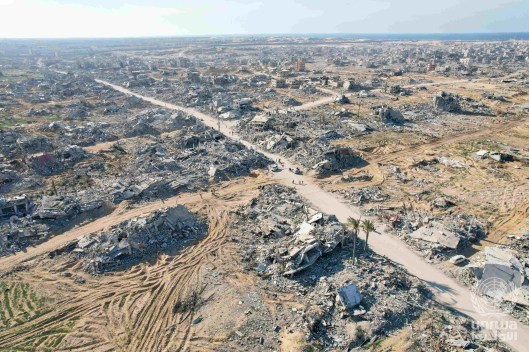



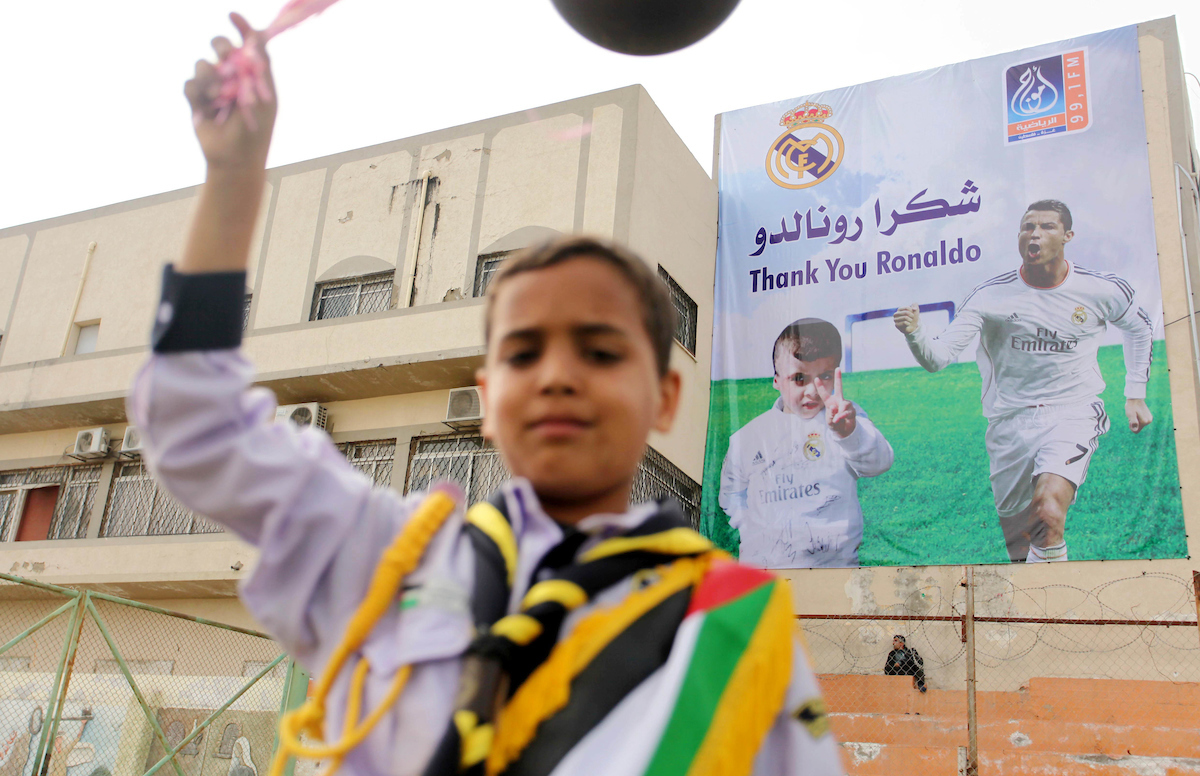
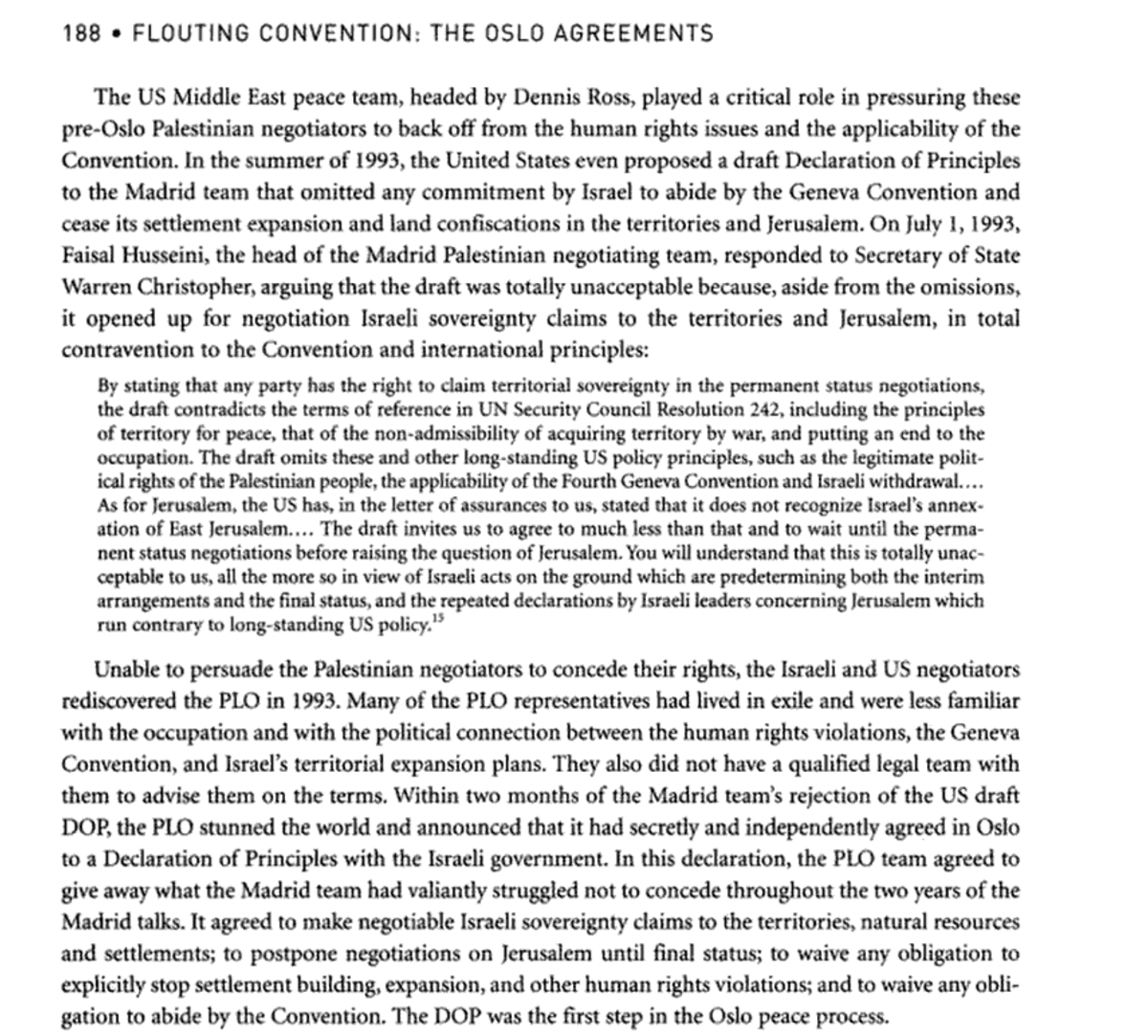
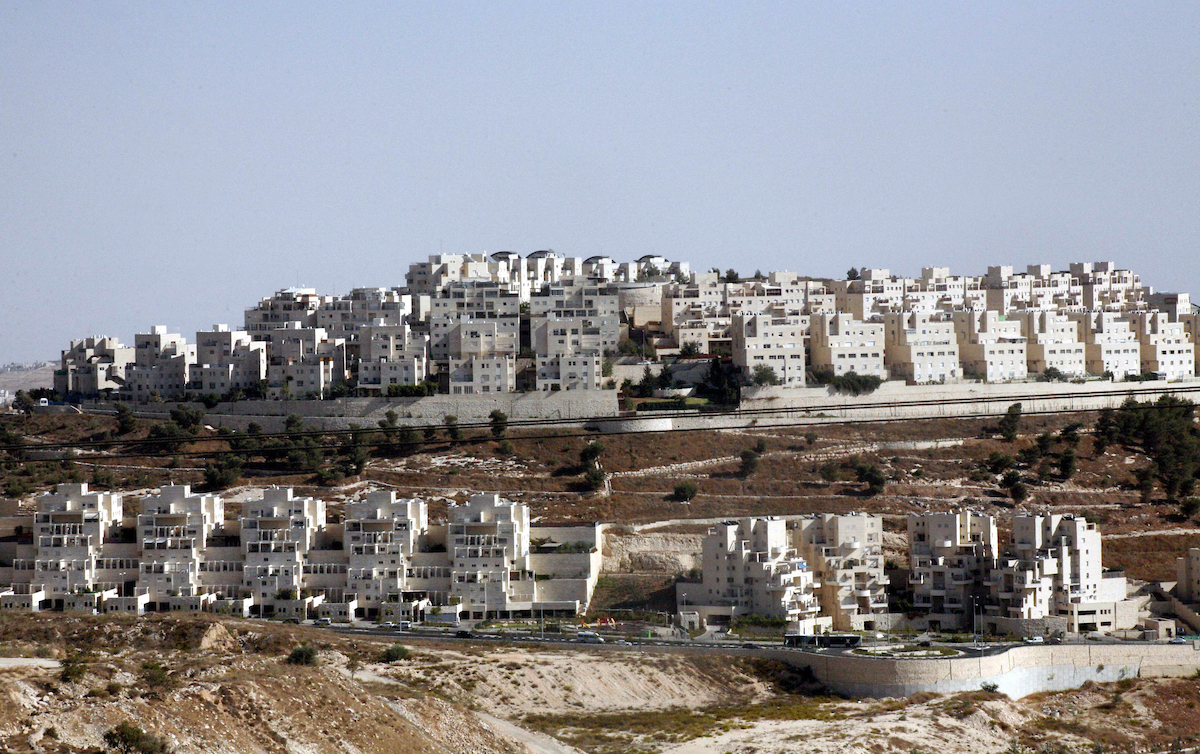

 Notes From Underground